Cyborg Sounds
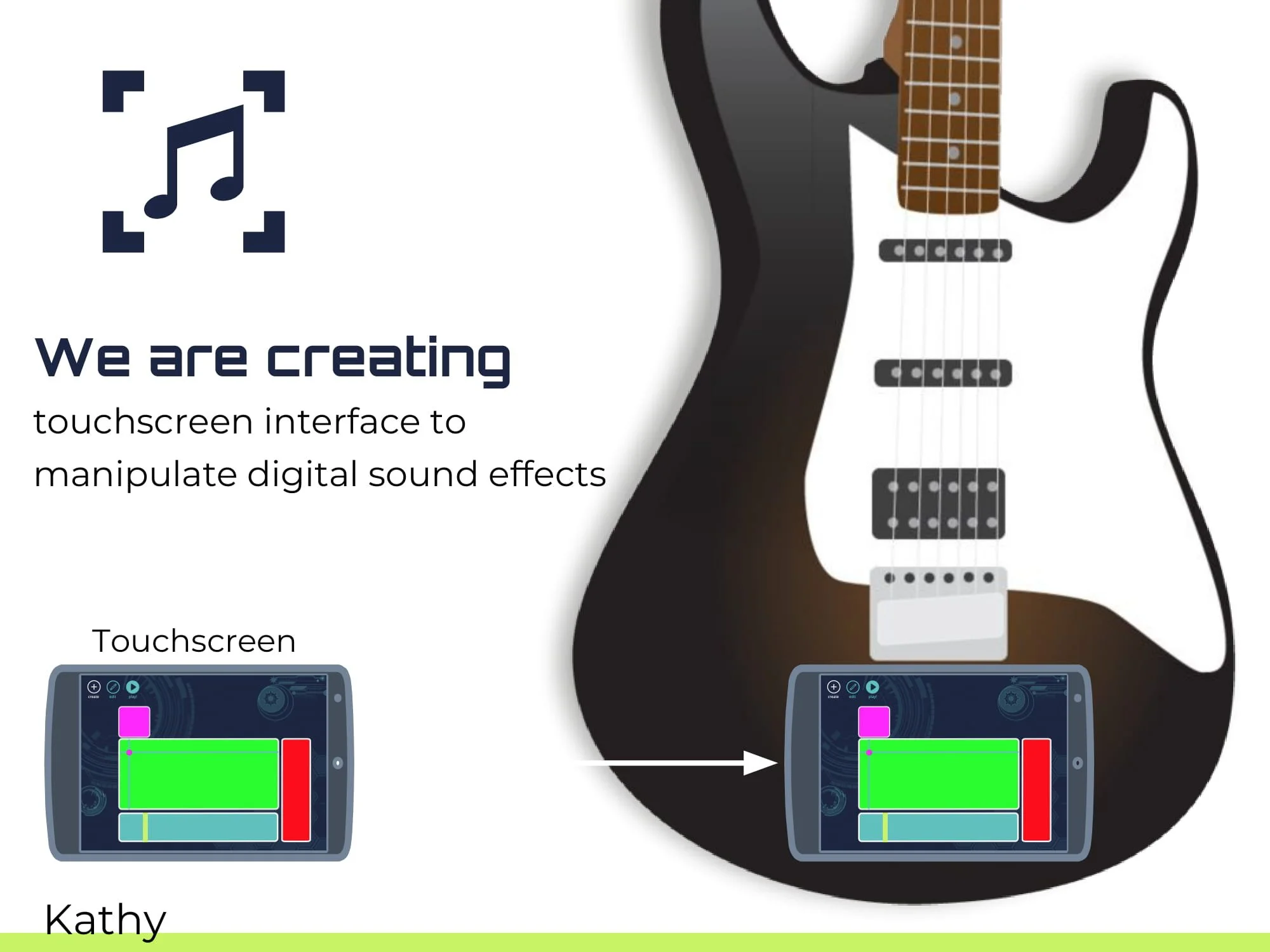
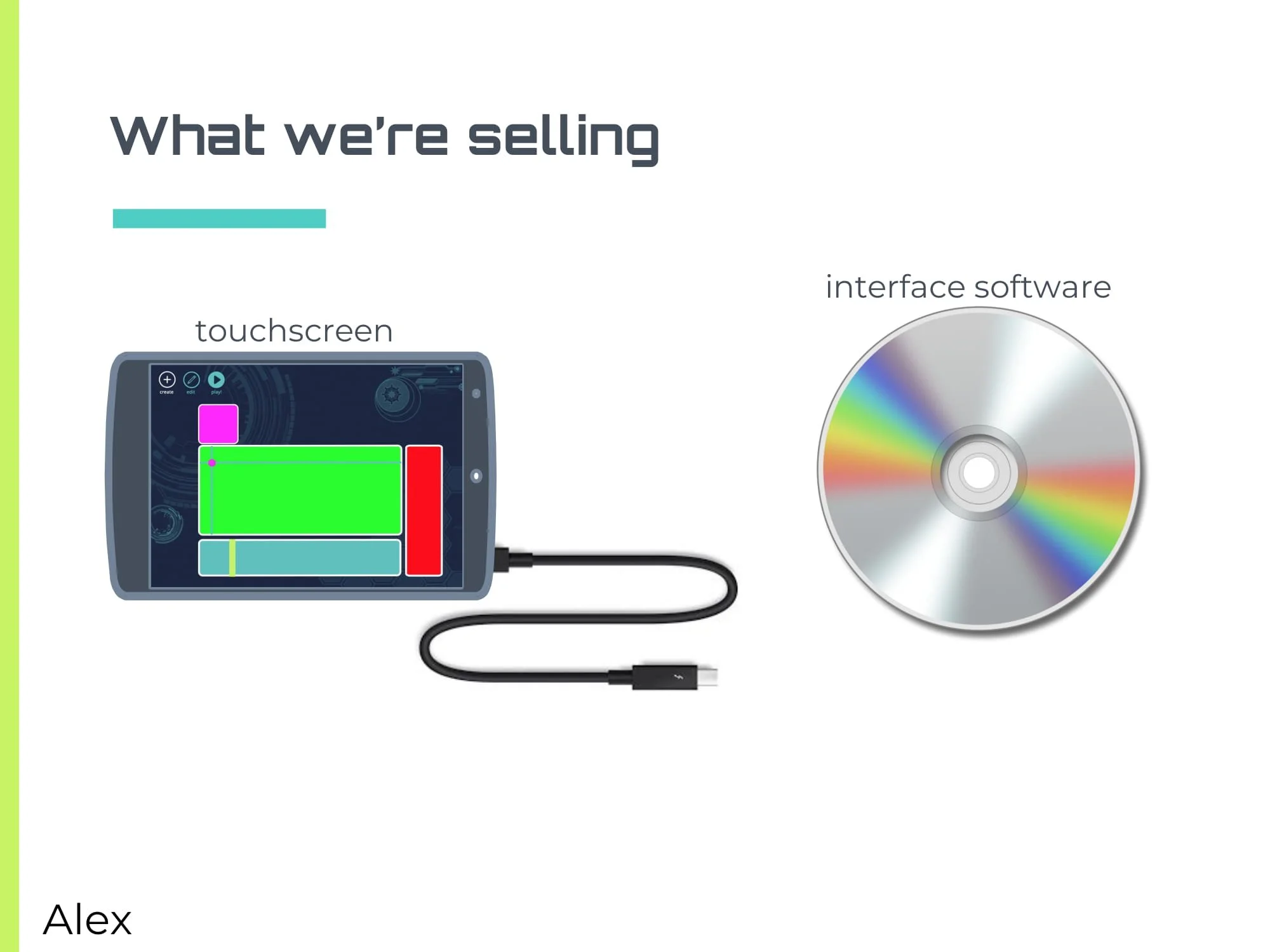
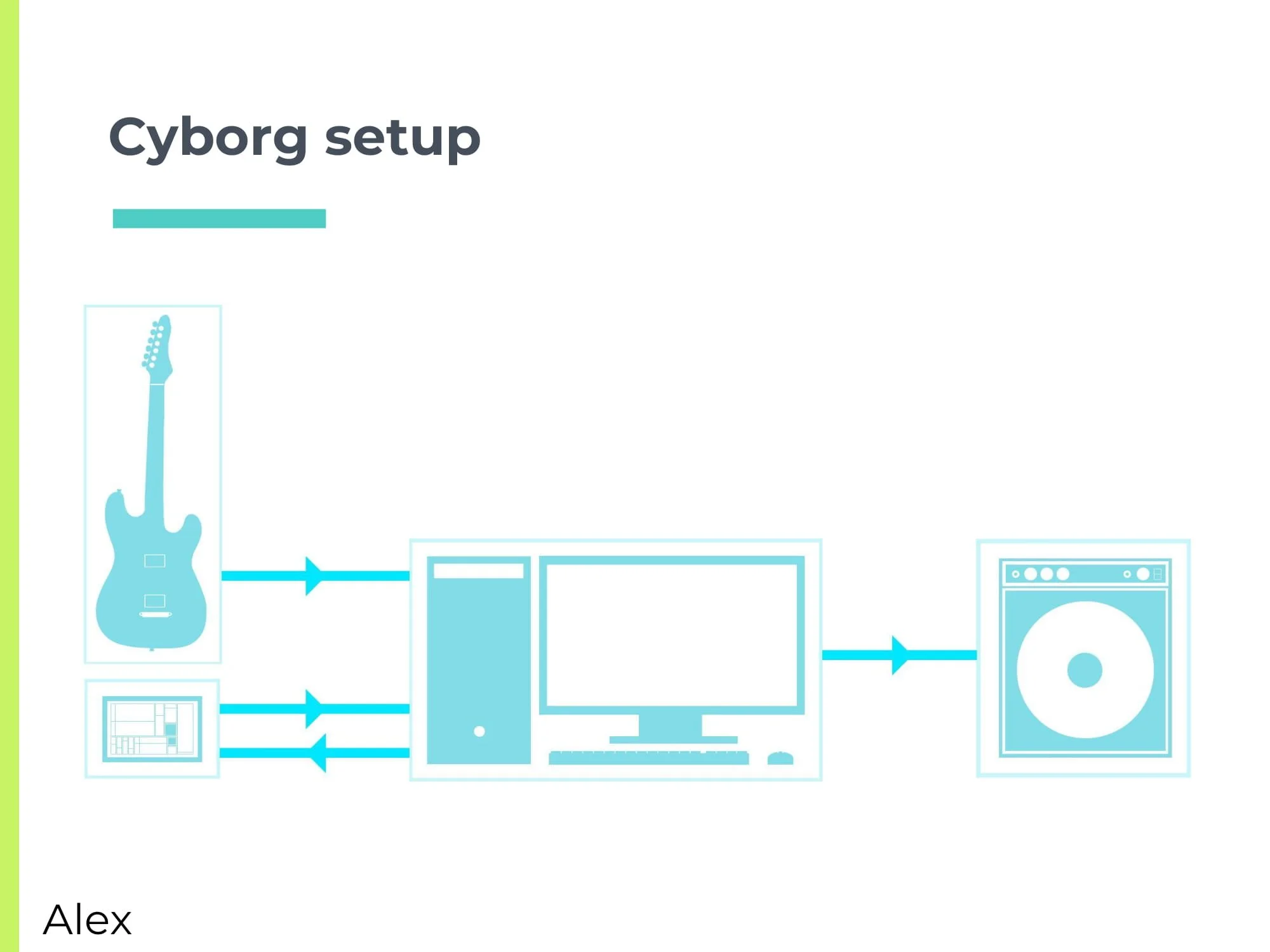
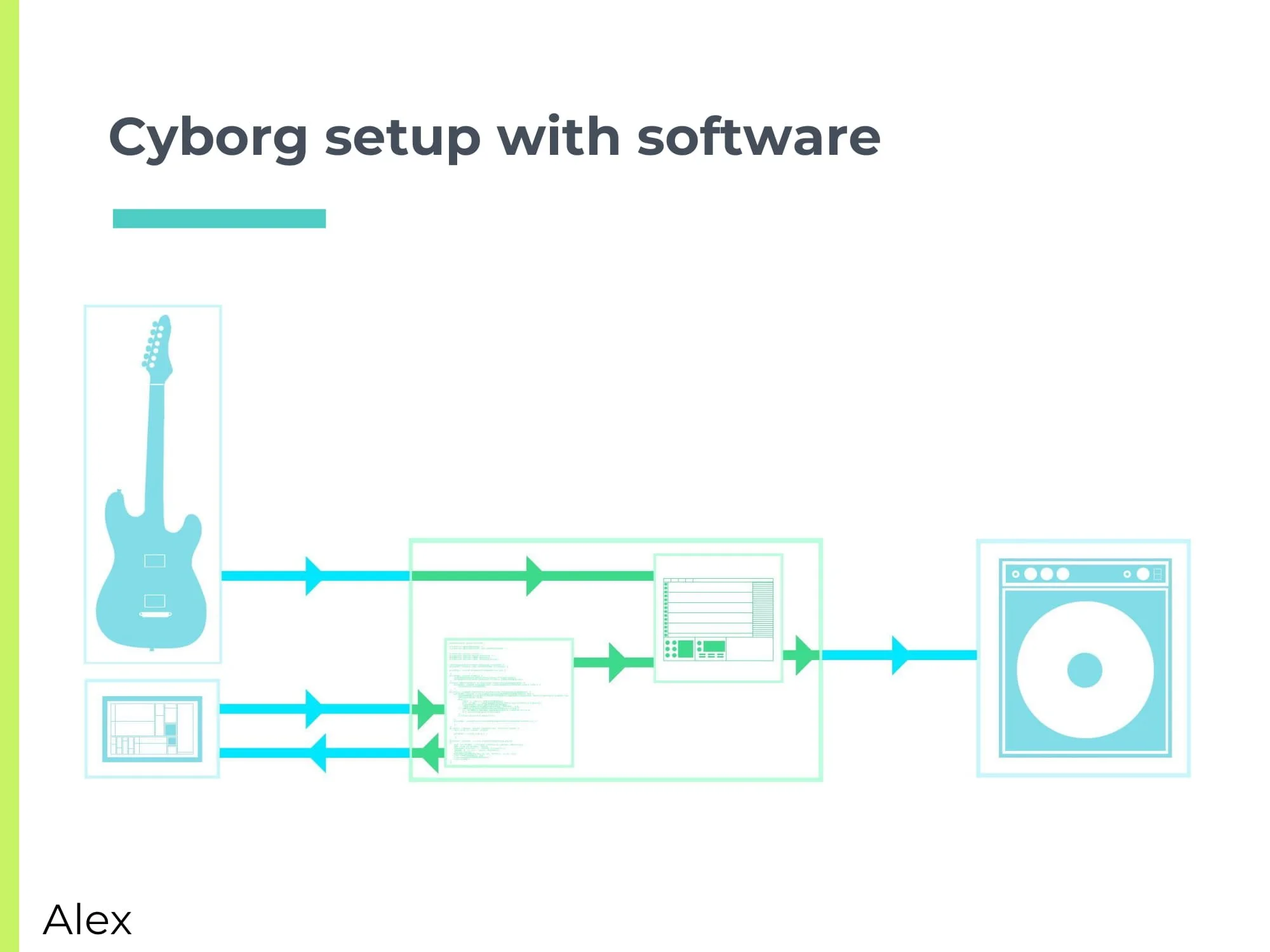
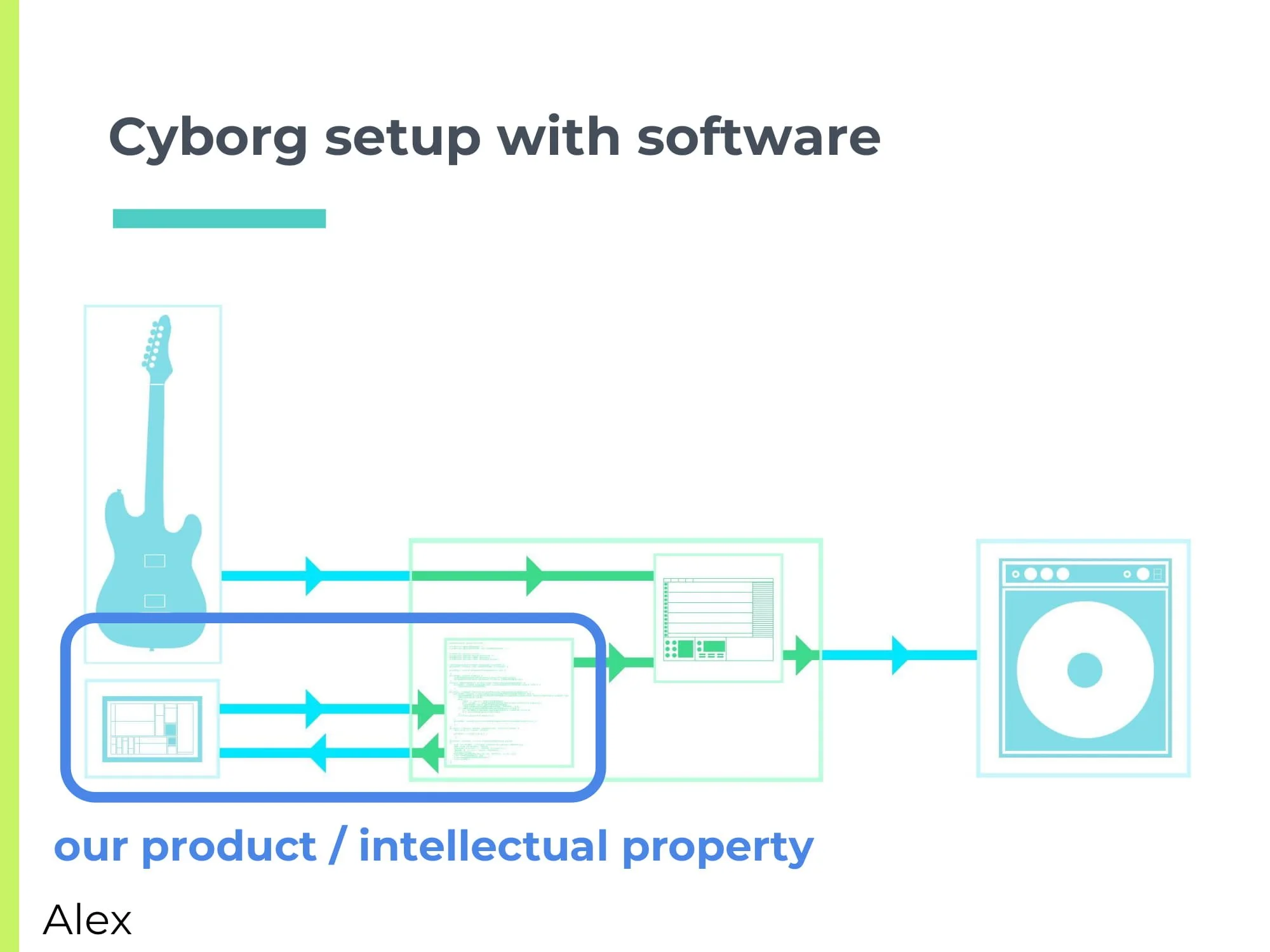
Combining analog and digital sounds on an interactive portable, attachable soundboard
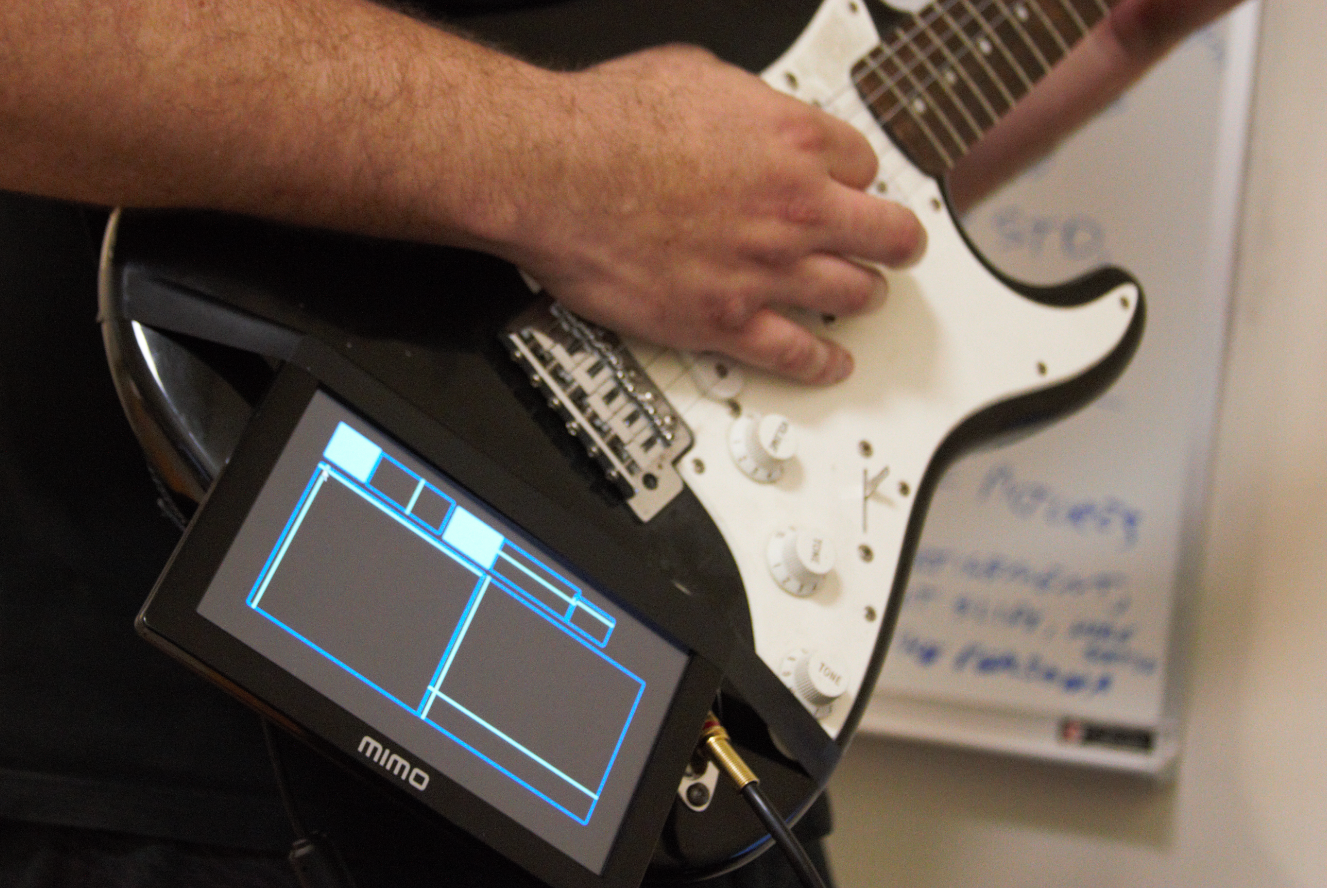
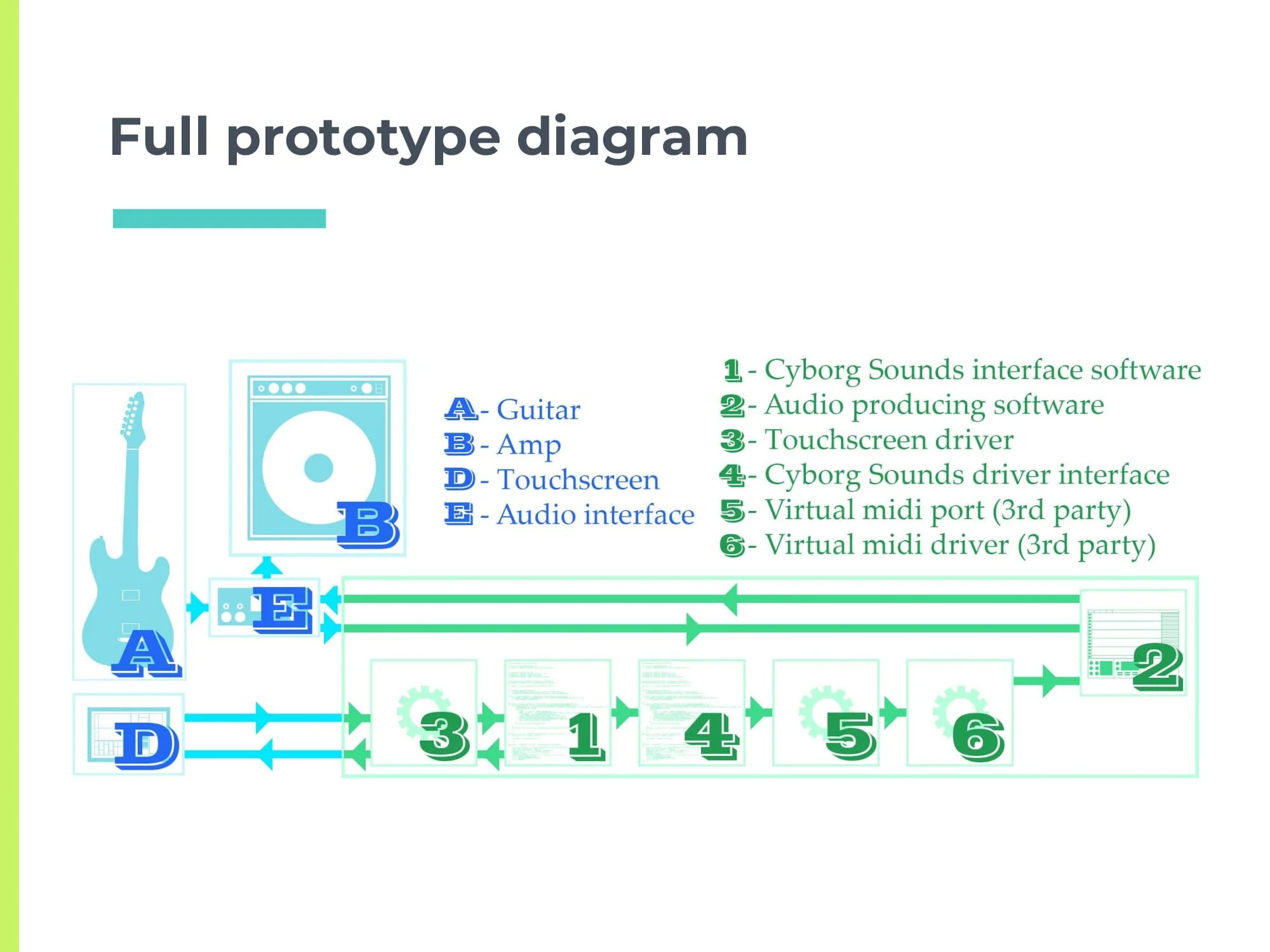
Our Pitch Prototype: The Cyborg Sounds digital interactive soundboard
Cyborg sounds was created through a product and prototype development class in which we could actually pitch and receive angel investor funds to get our product started! The UCSD incubator would also be open to the winners to provide a workspace and advisors.
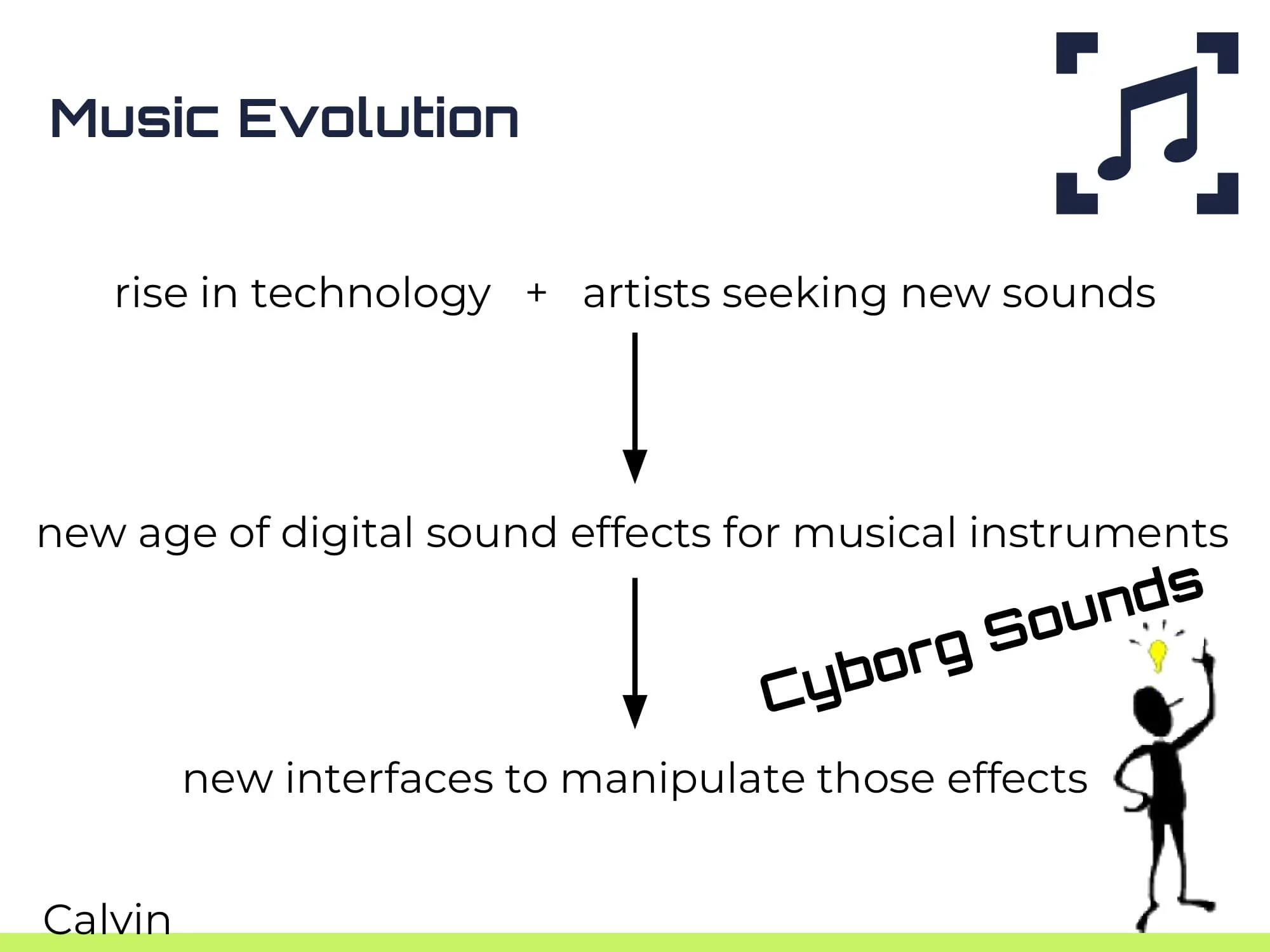
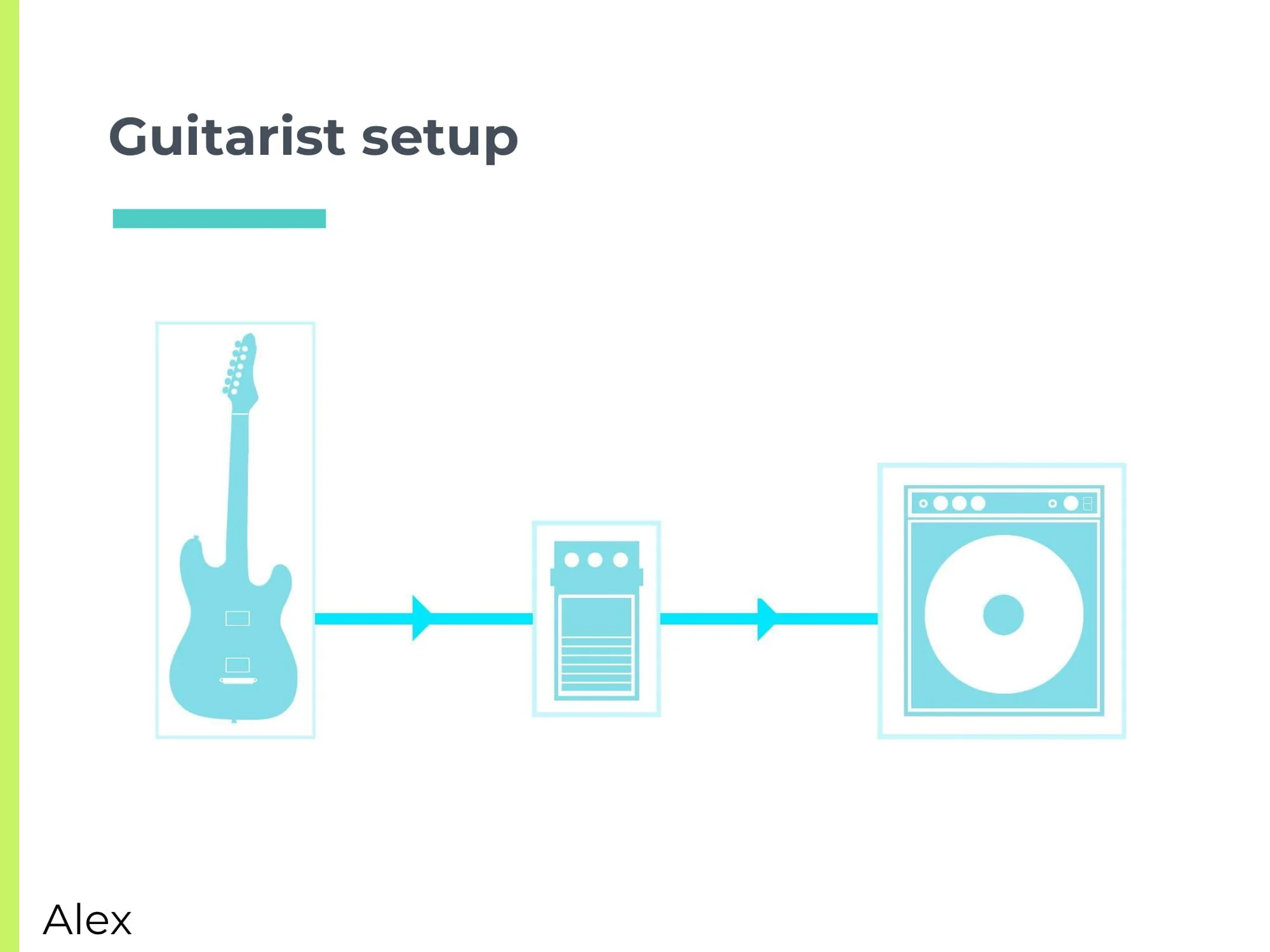
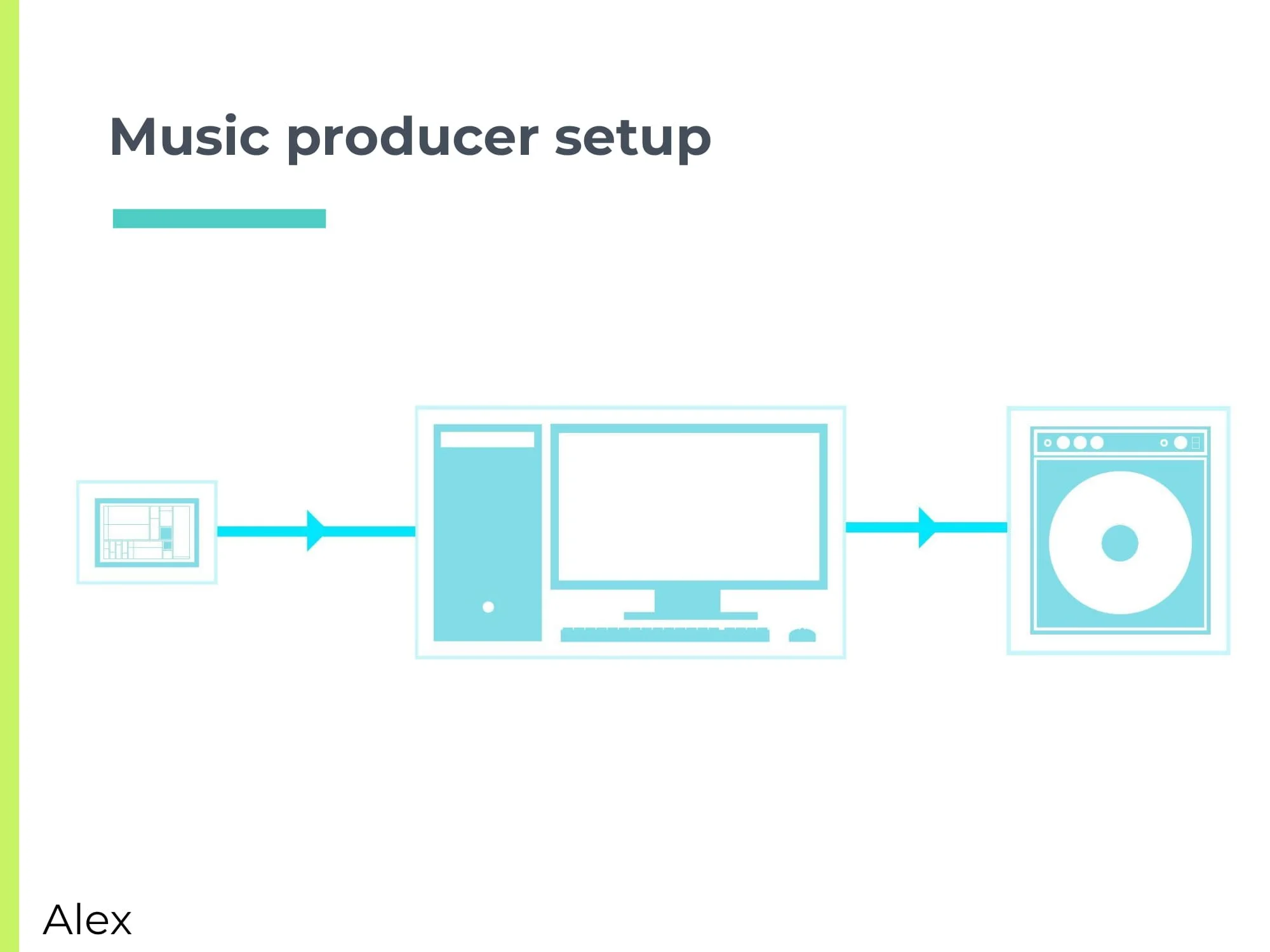
This idea was born from our founder Alex, who often encountered issues when trying to create a customized soundboard for his electric guitar’s digital effects. My love for music made me instantly want to help him make his idea a reality and I jumped to be a part of his team.
And guess what!! We won 1st place out of 9 other projects judged by the angel investors and received $1000 if we wanted to continue development!
Afterwards, however, the founder decided to just leave the idea as a prototype and we all enjoyed the great memories of this project together by celebrating with a beer and a cigar :)
Our team consisted of a good spread of roles and skills:
Alex: Passionate Founder
Jake & Kathy: UI/UX
Calvin: Software and programming
Soo (me!): Physical prototyping and integration
This was my first time actually pitching a product that could become the real thing! We learned about provisional patents and the process in which actual prototypes become real products. I loved this process so much and am still so passionate about it!
(Also don’t worry, we know the name is silly but it was in all good fun and mostly a placeholder)
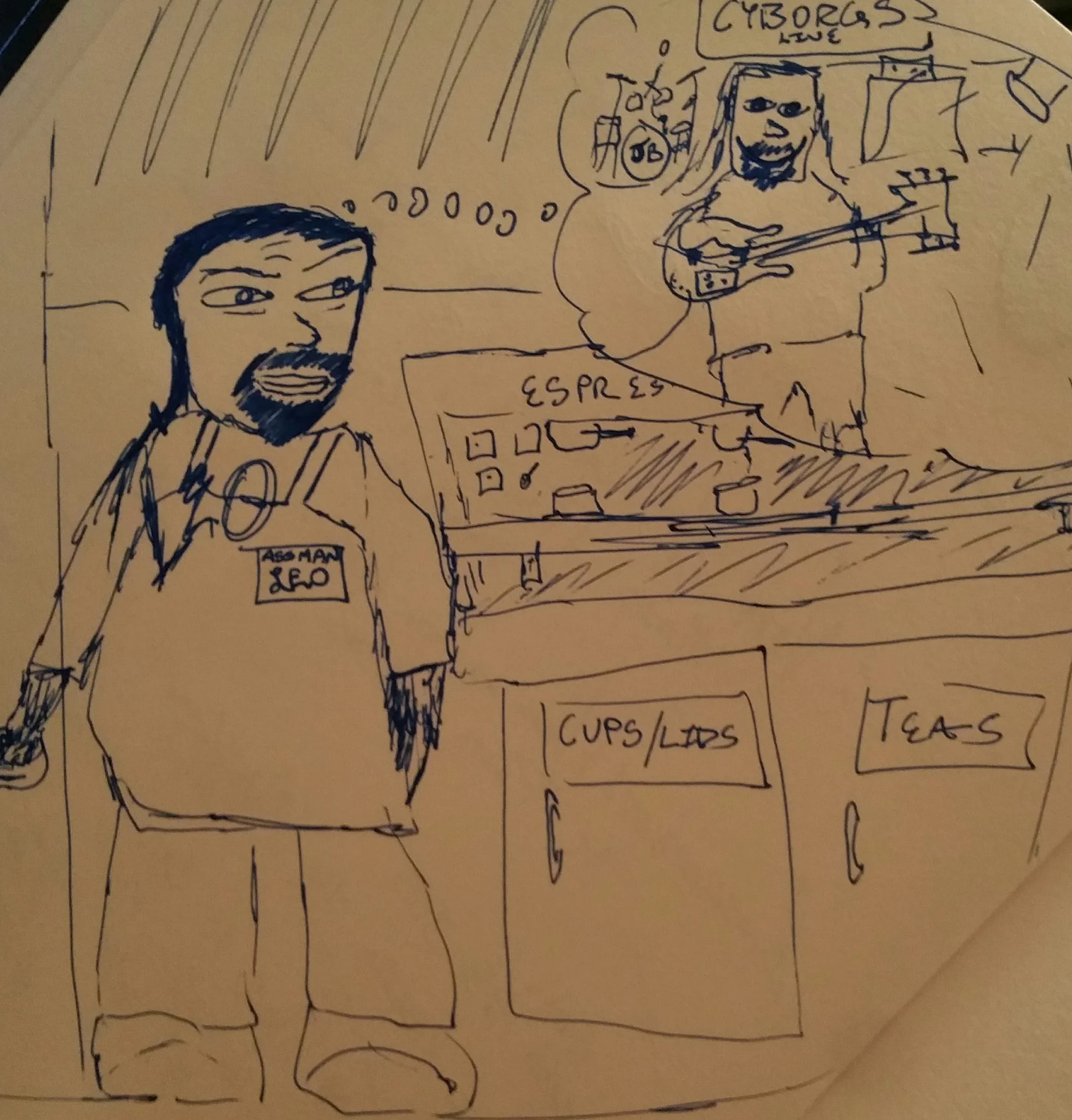
Our target consumer, “Leo”, a musician that works days in a cafe and moonlights as a punk rock guitarist. (Lovingly drawn by our founder Alex)
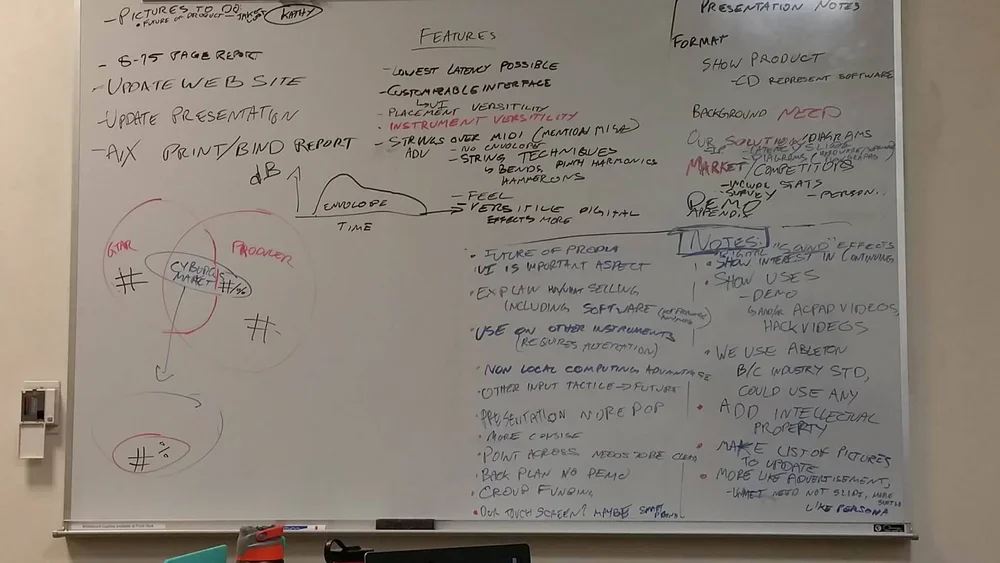
The brainstorming process
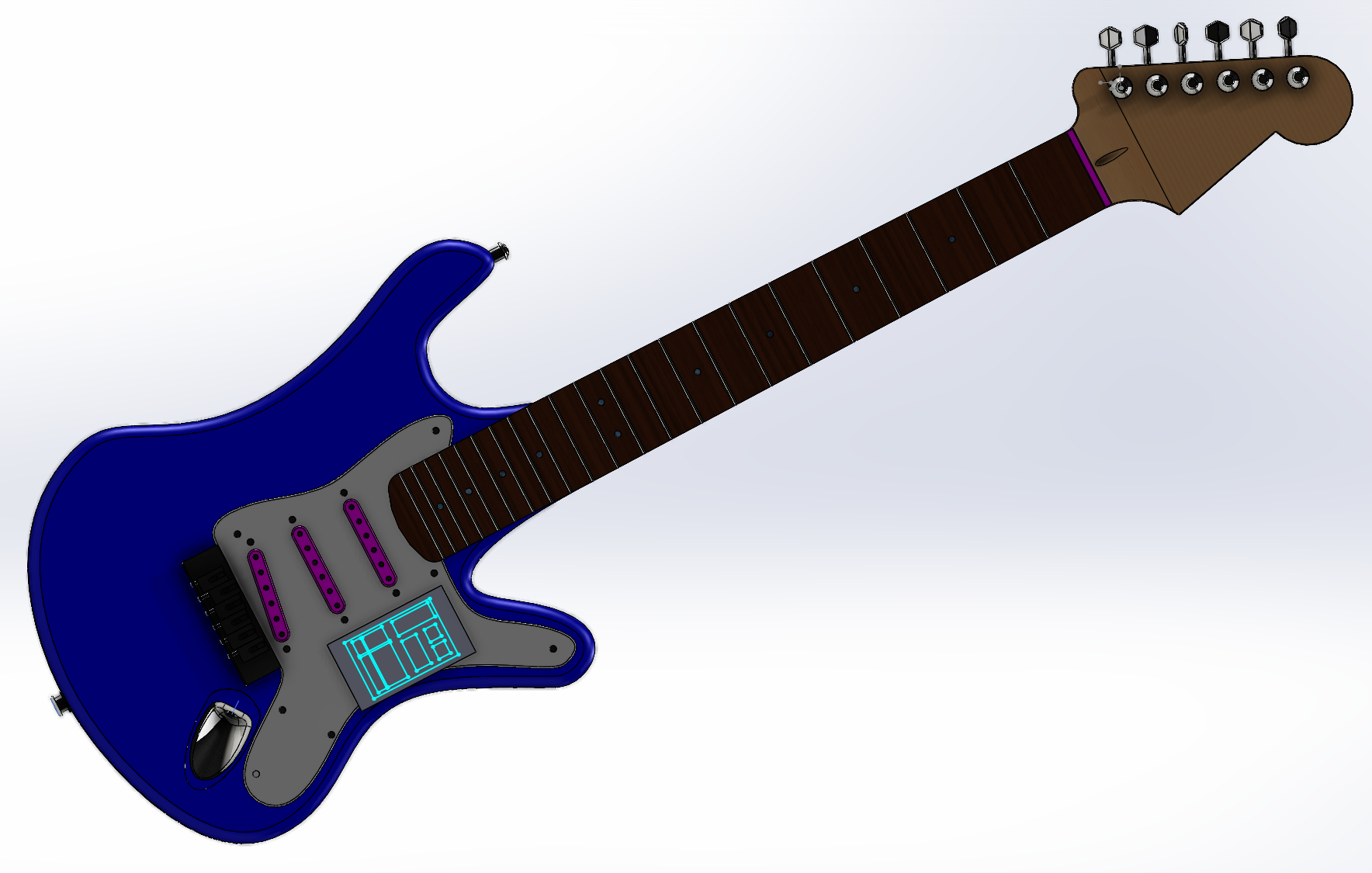
A quick CAD model of our prototype that I made to show how this would be utilizied
My ROles
(full writeup Below in Documentation)
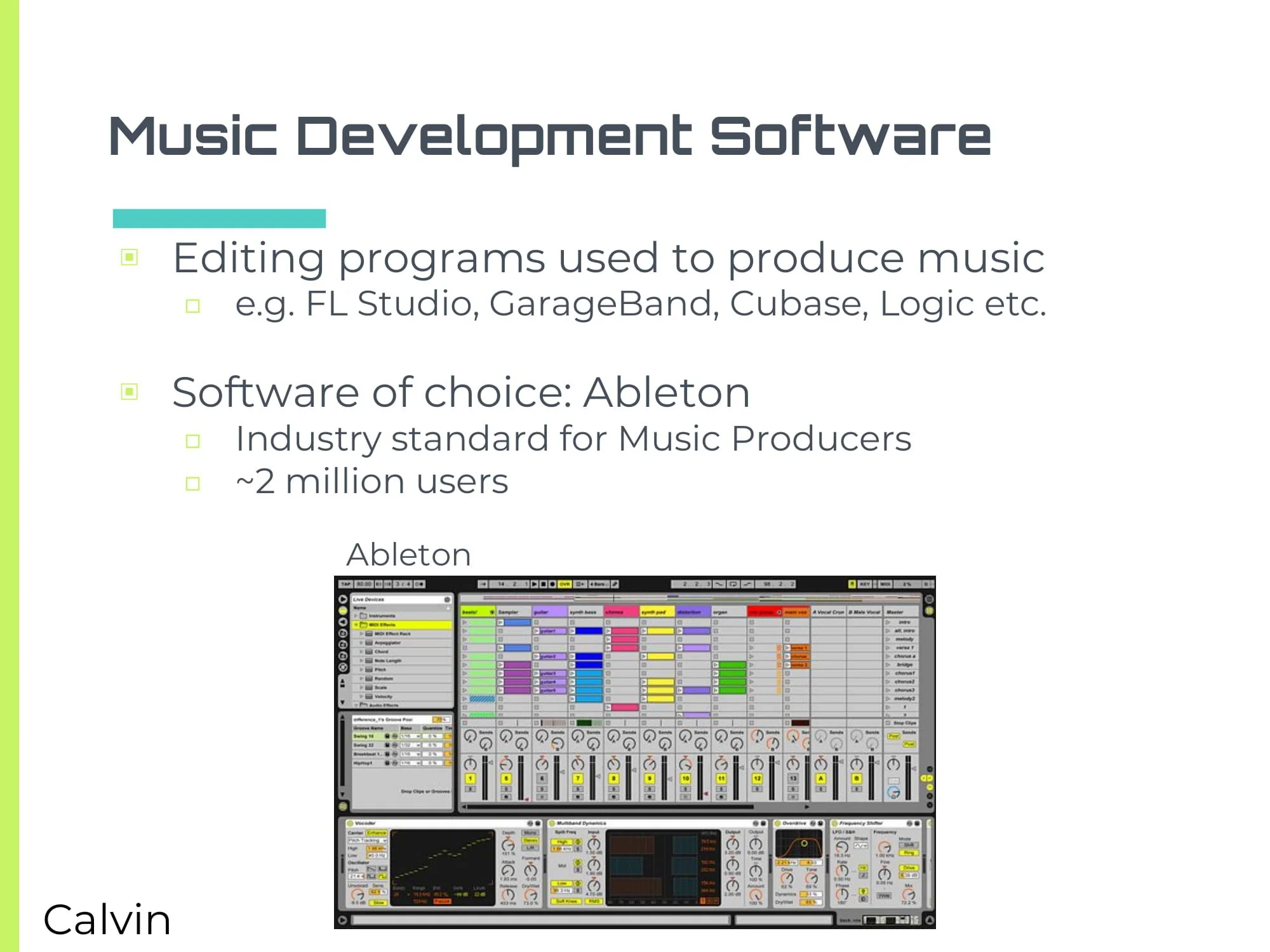
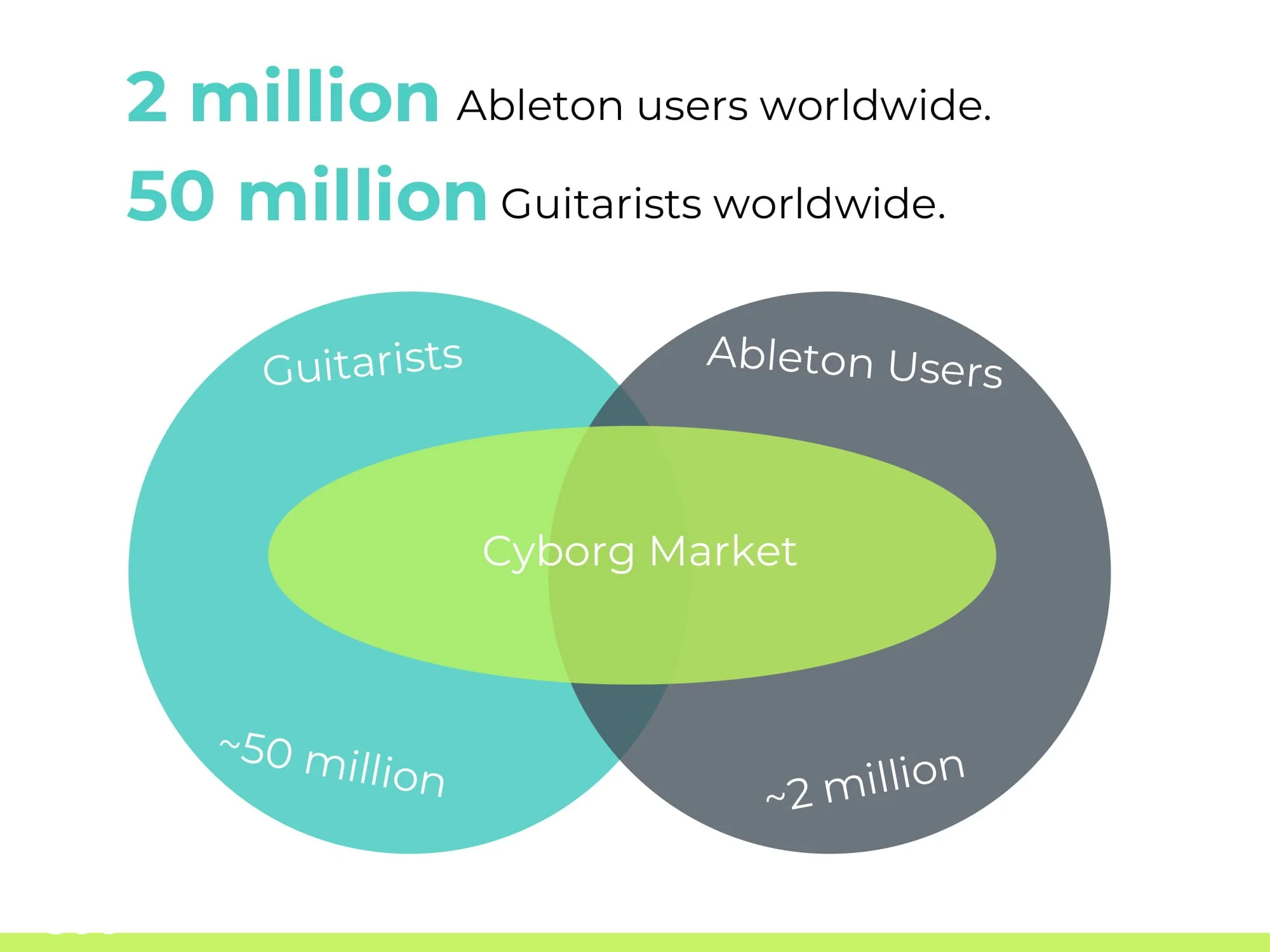
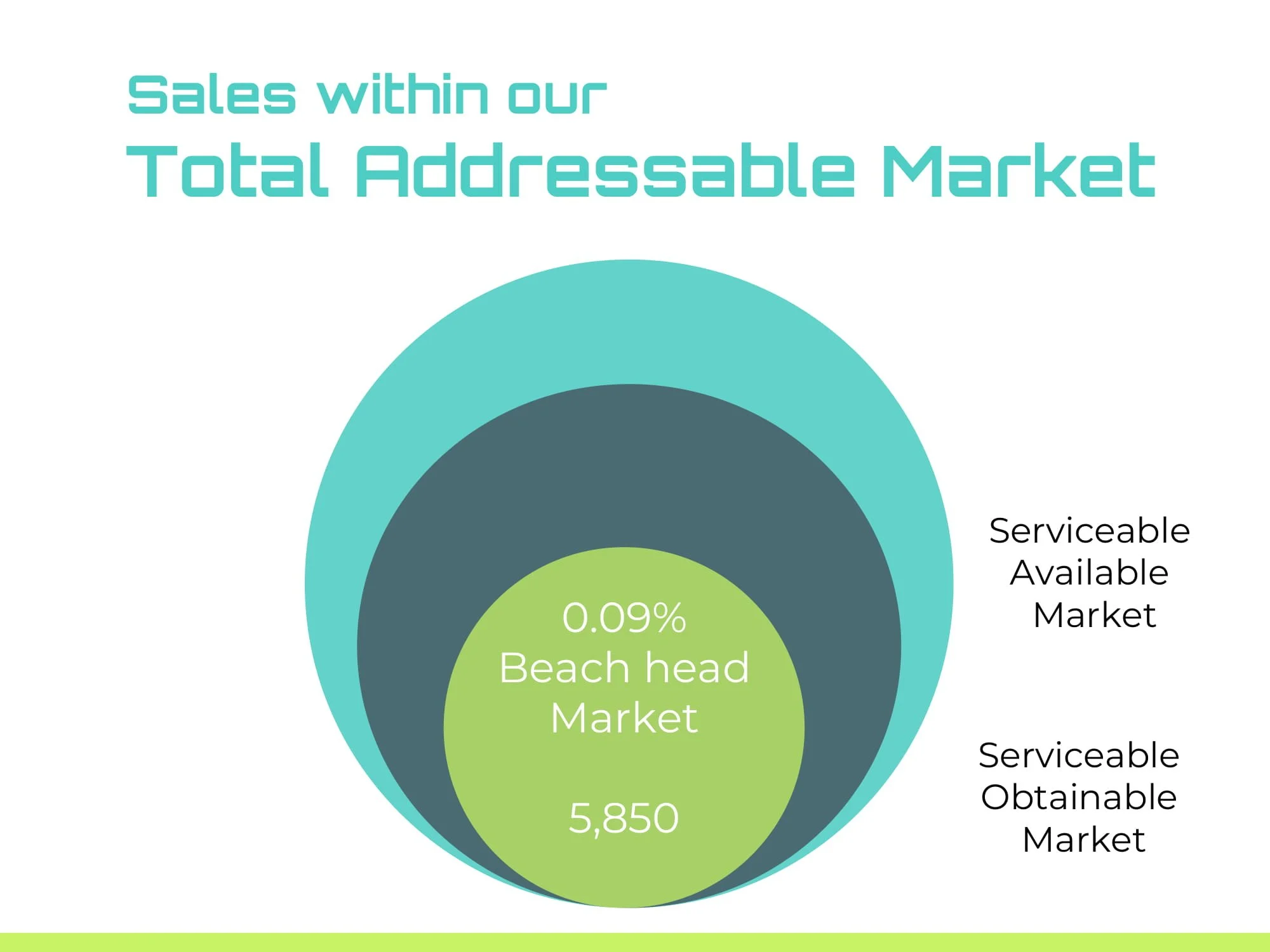
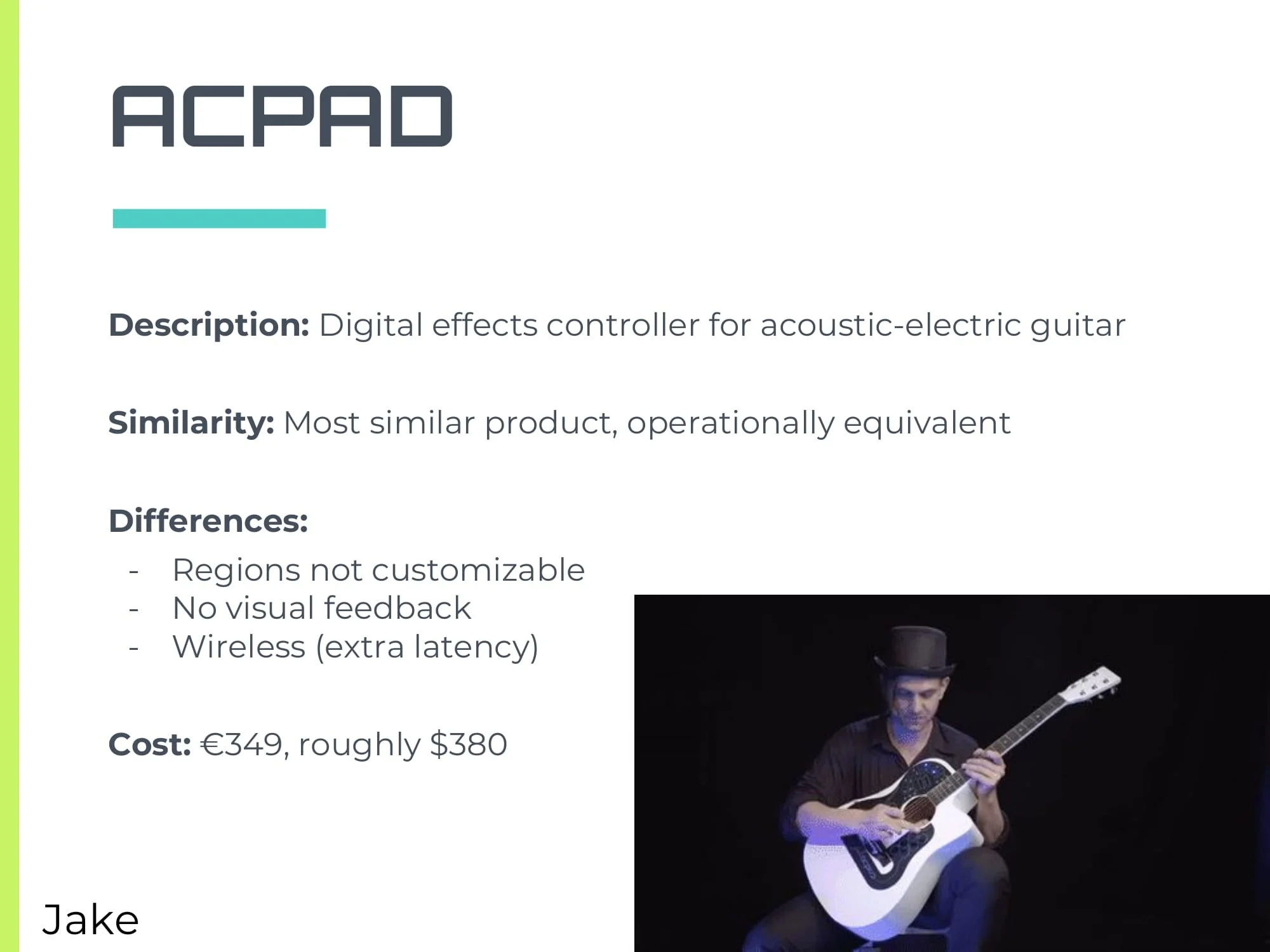
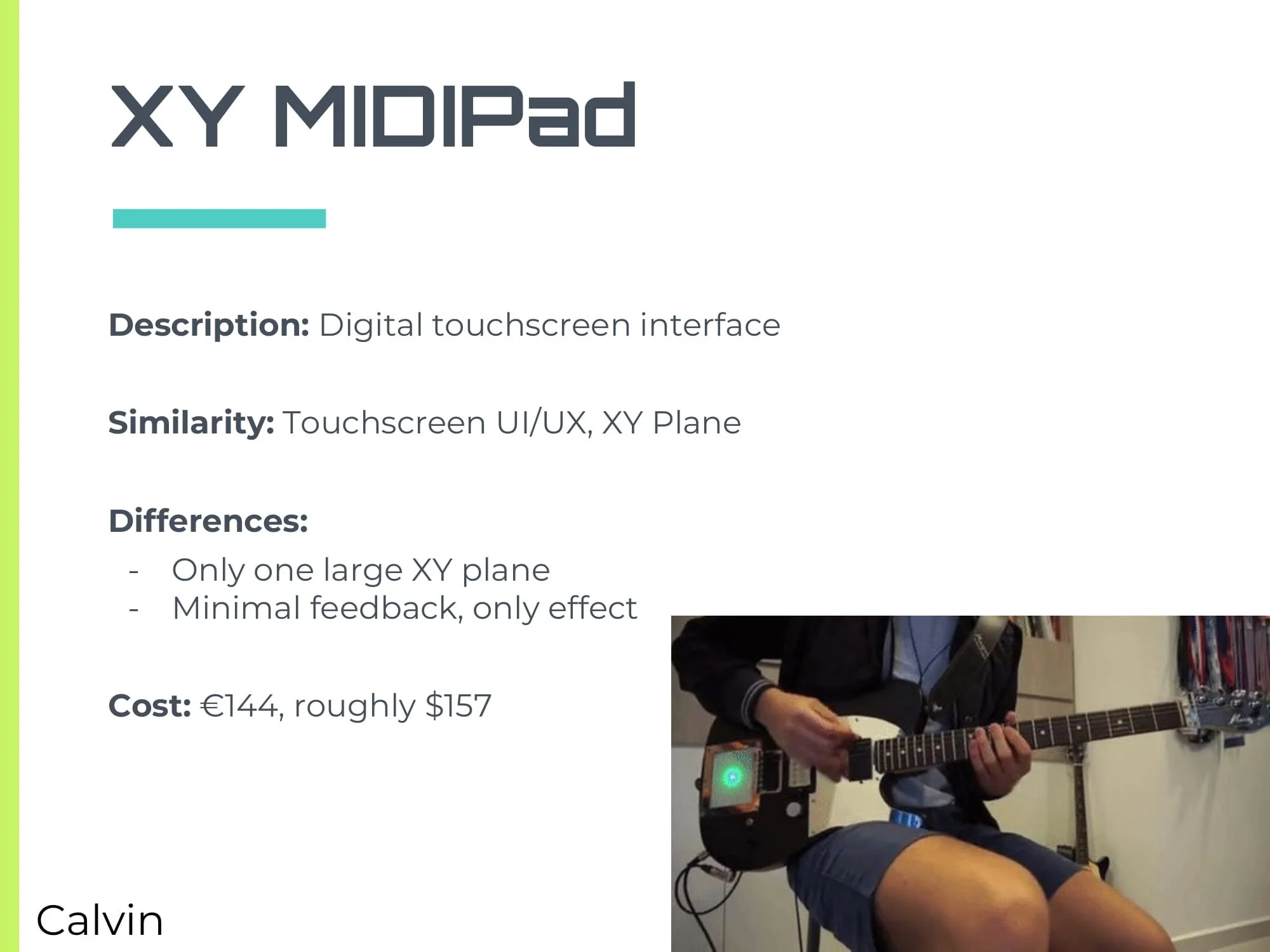
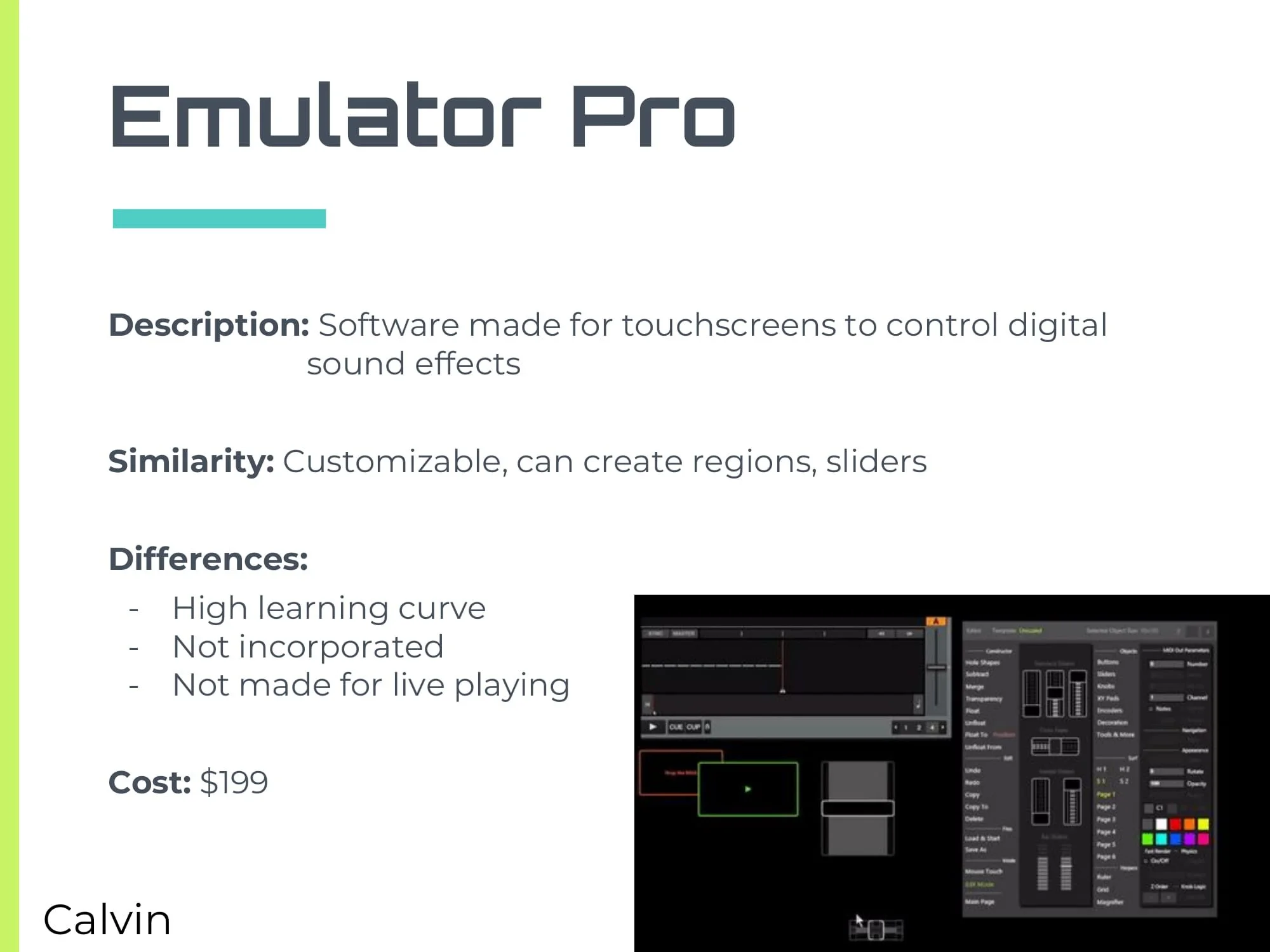
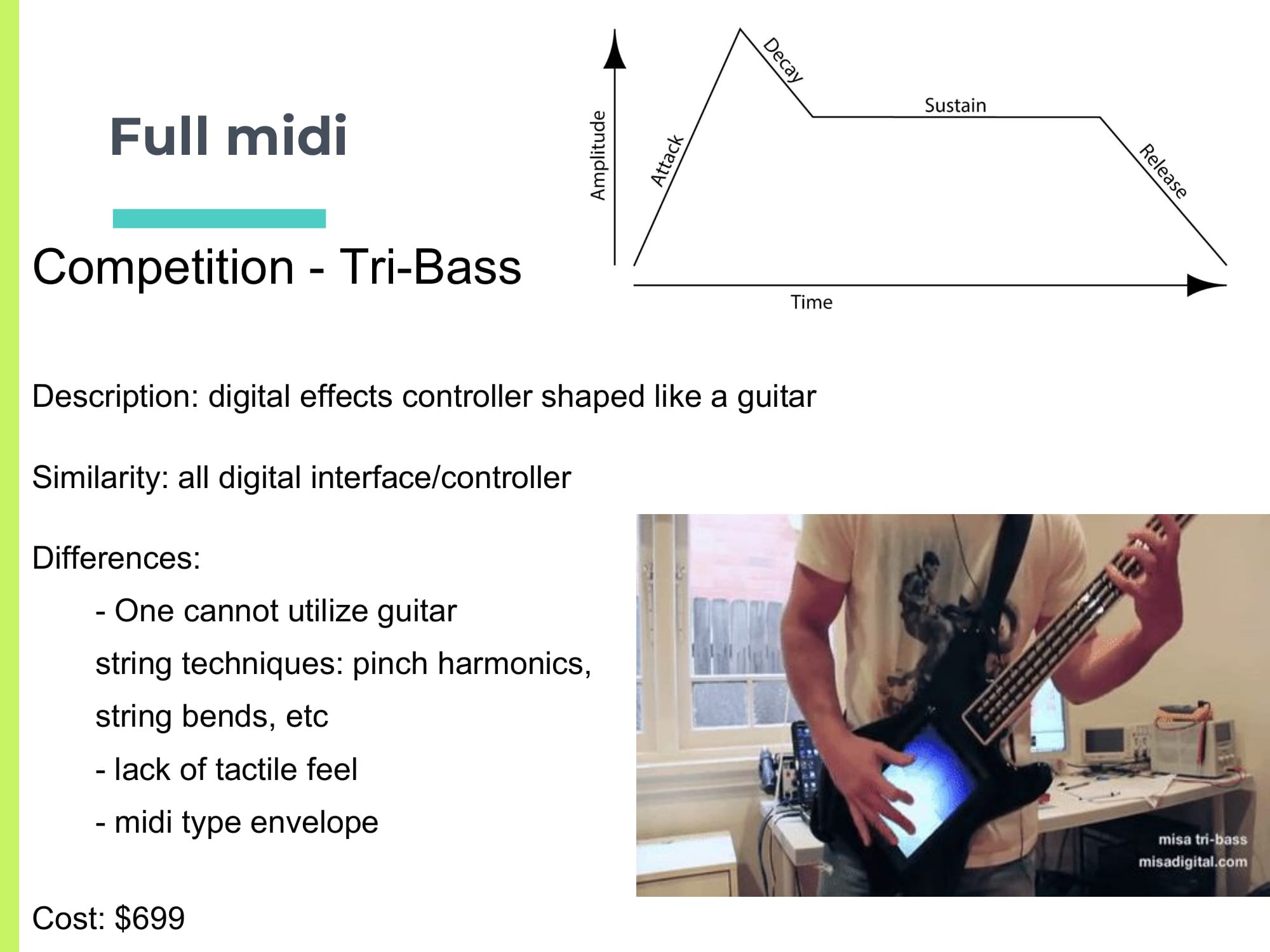
Market research into competing products
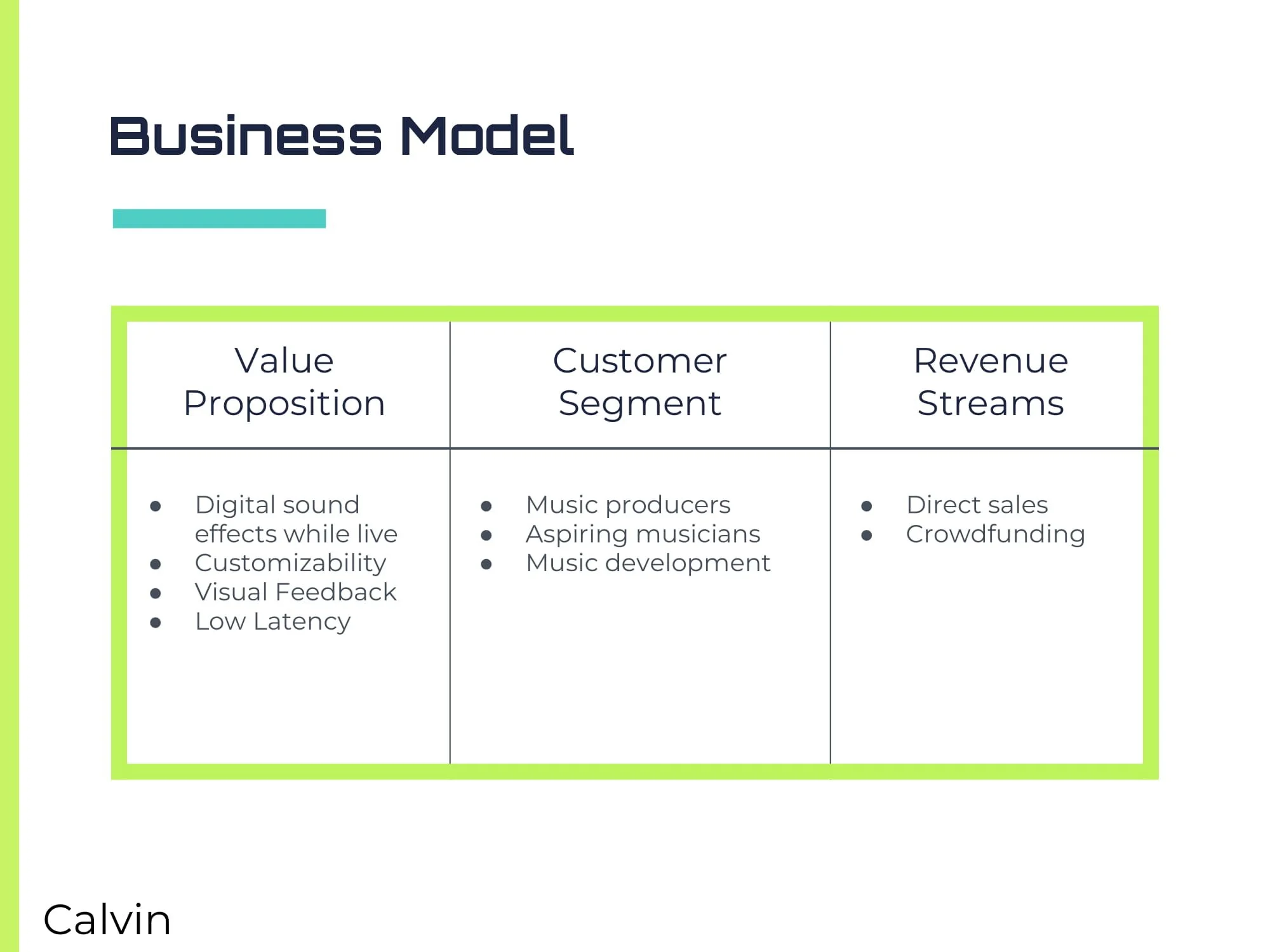
I spent weeks comparing and contrasting our potential product with other pre-existing similar products so we could find our niche.
I studied each similar product to see where we could improve or if this would be a viable/sellable product with an actual market need.
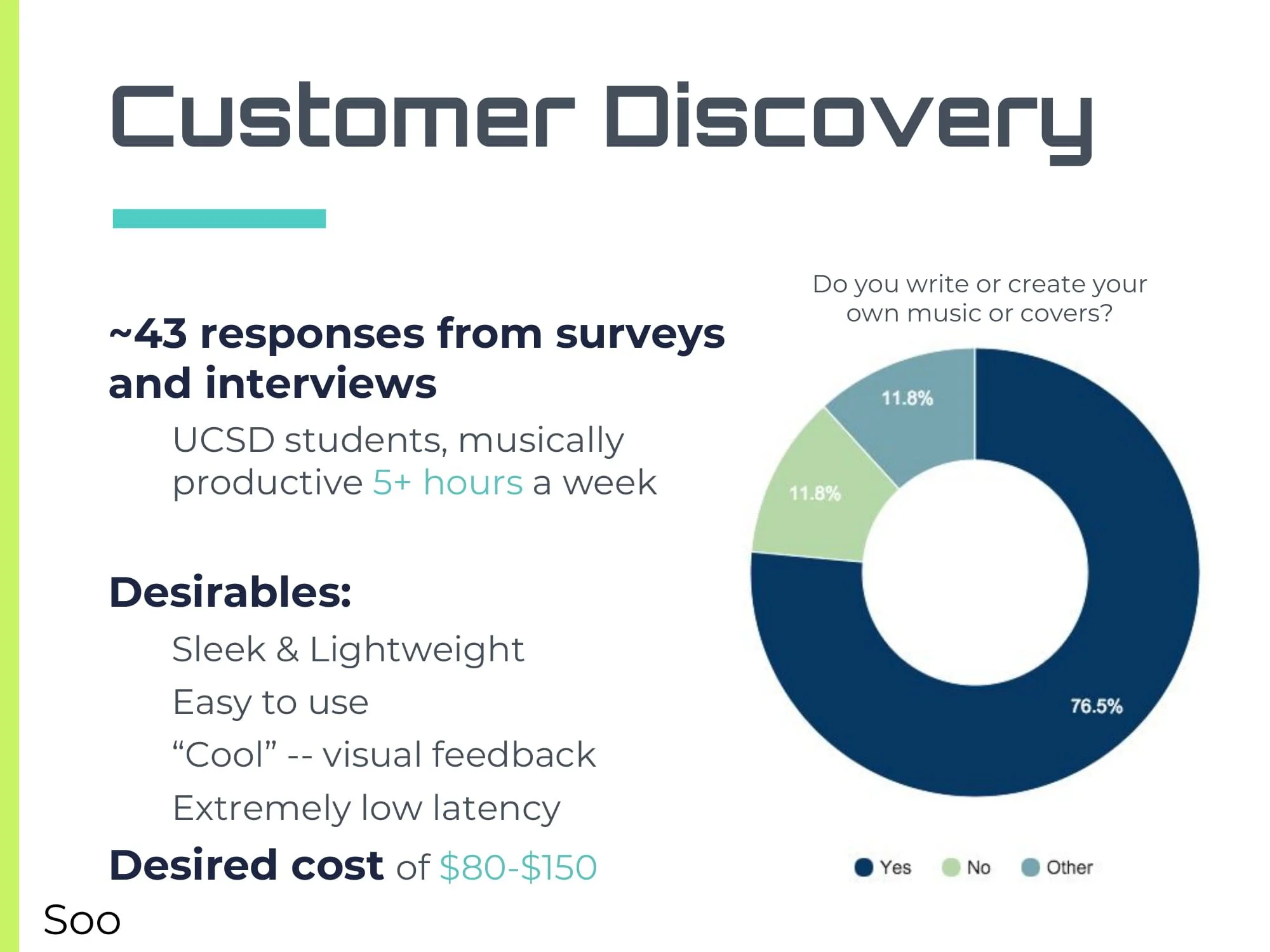
Extensive surveying of peer groups
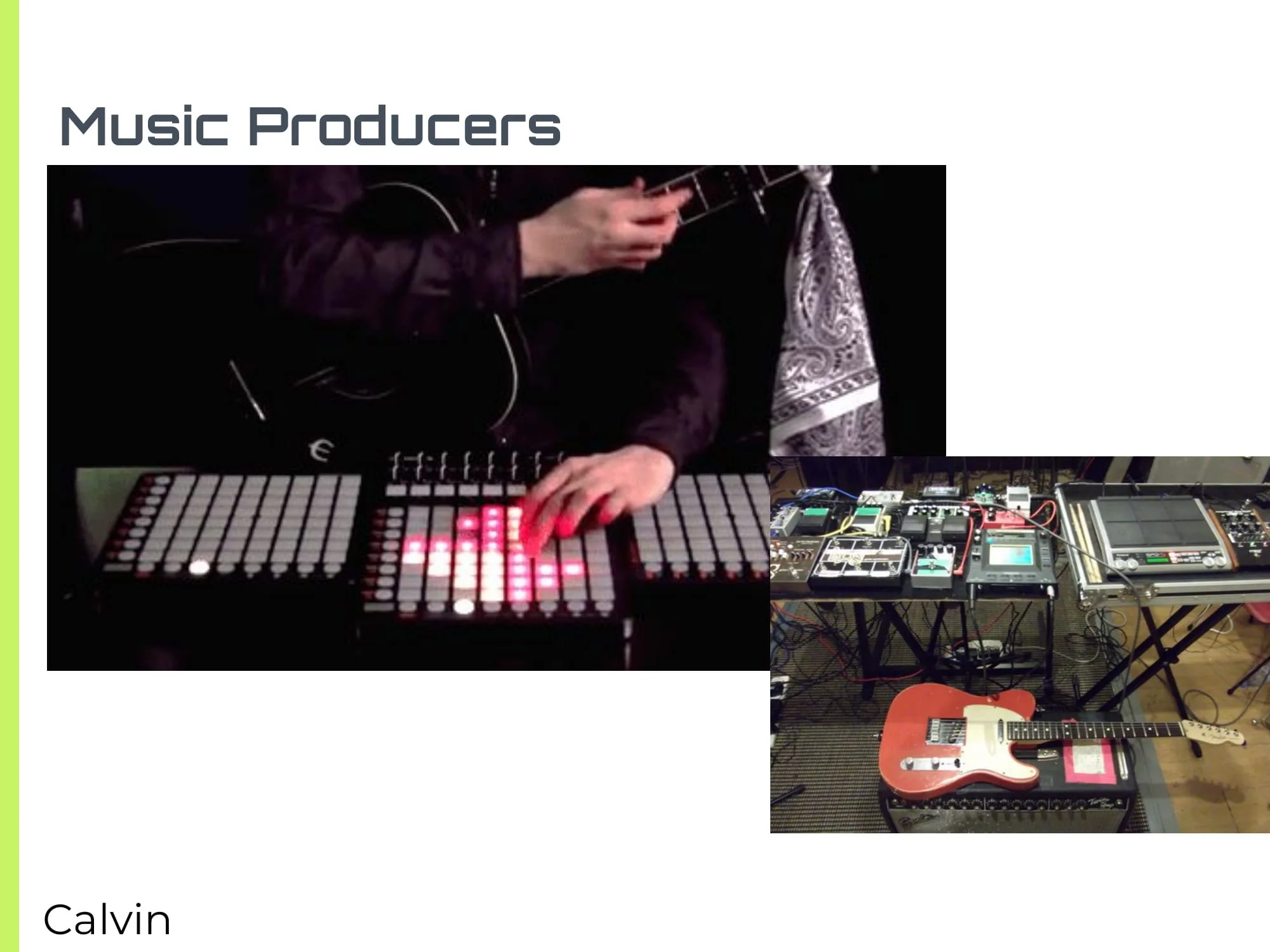
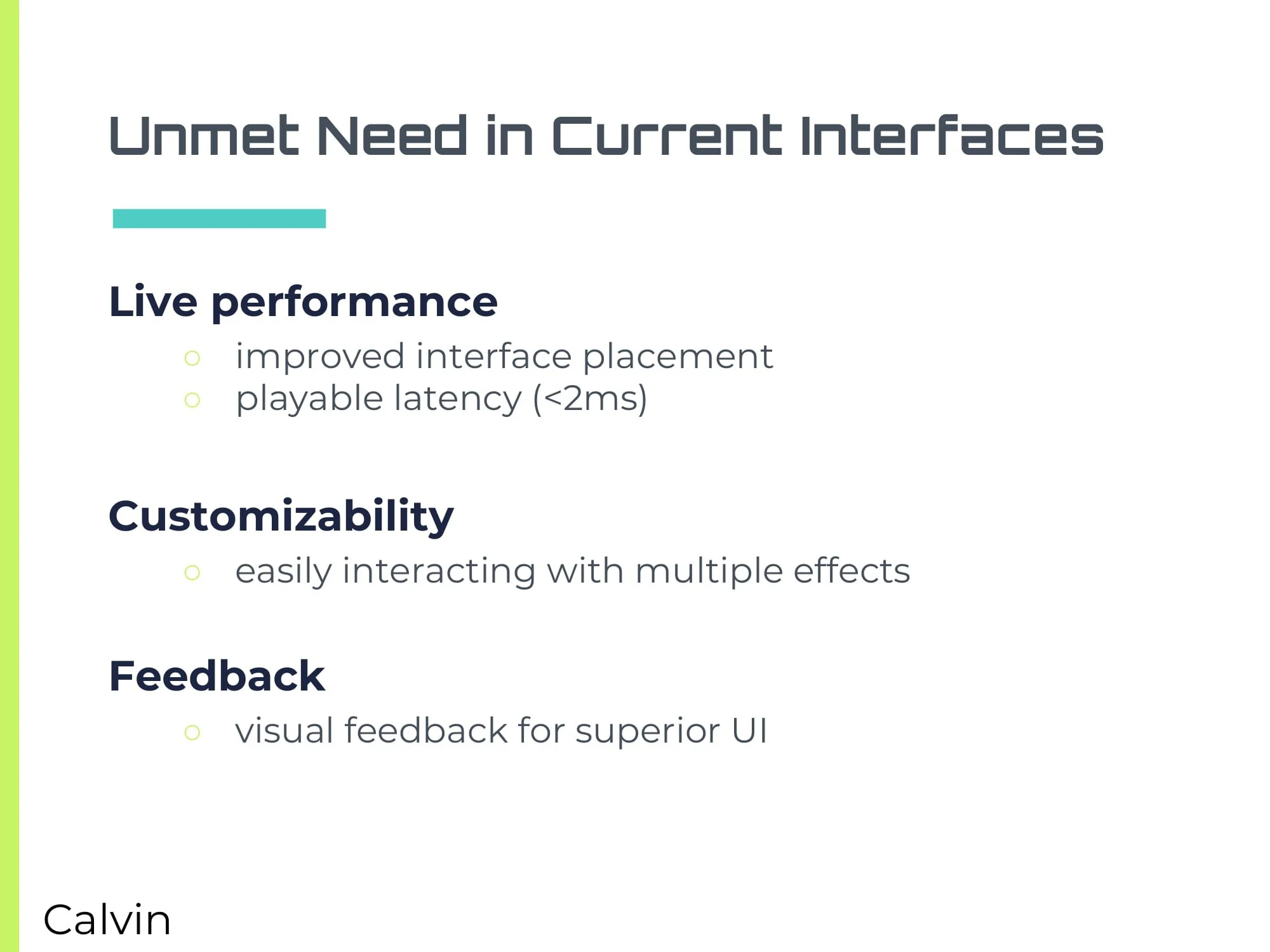
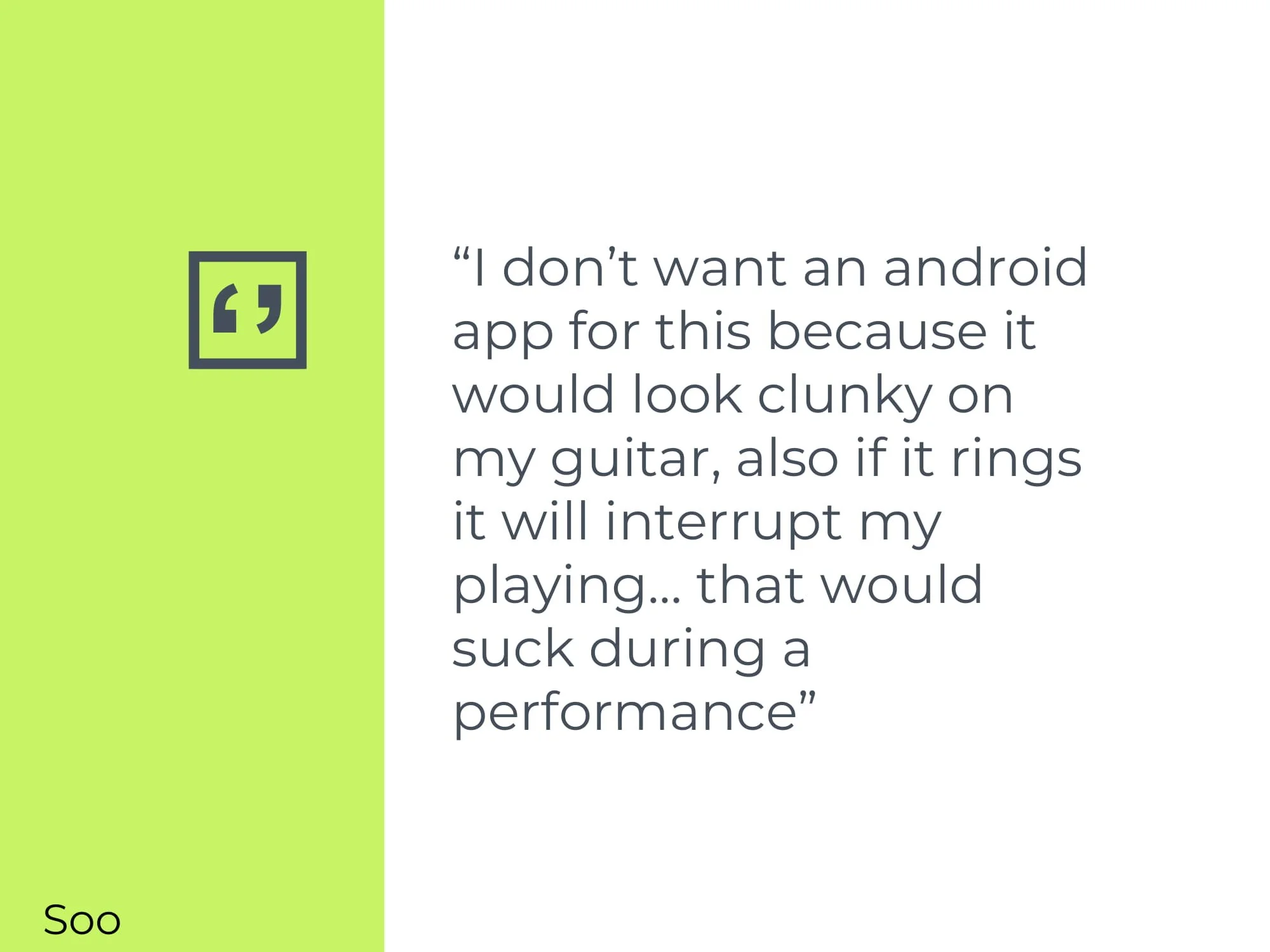
I interviewed musicians, music producers, and A/V techs to get their point of view on the product, any specific issues that they face, and if they would be willing to purchase something like this product.
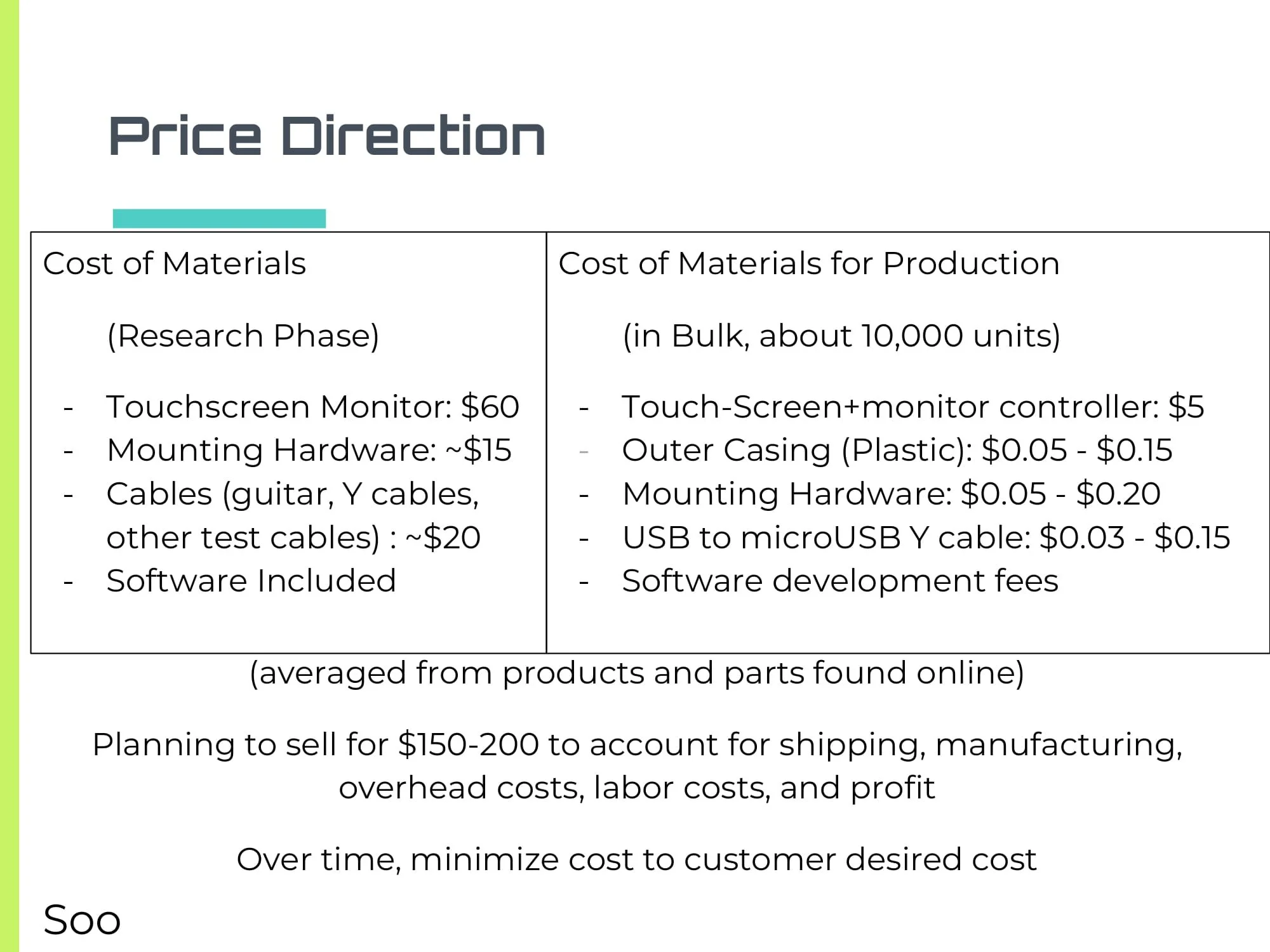
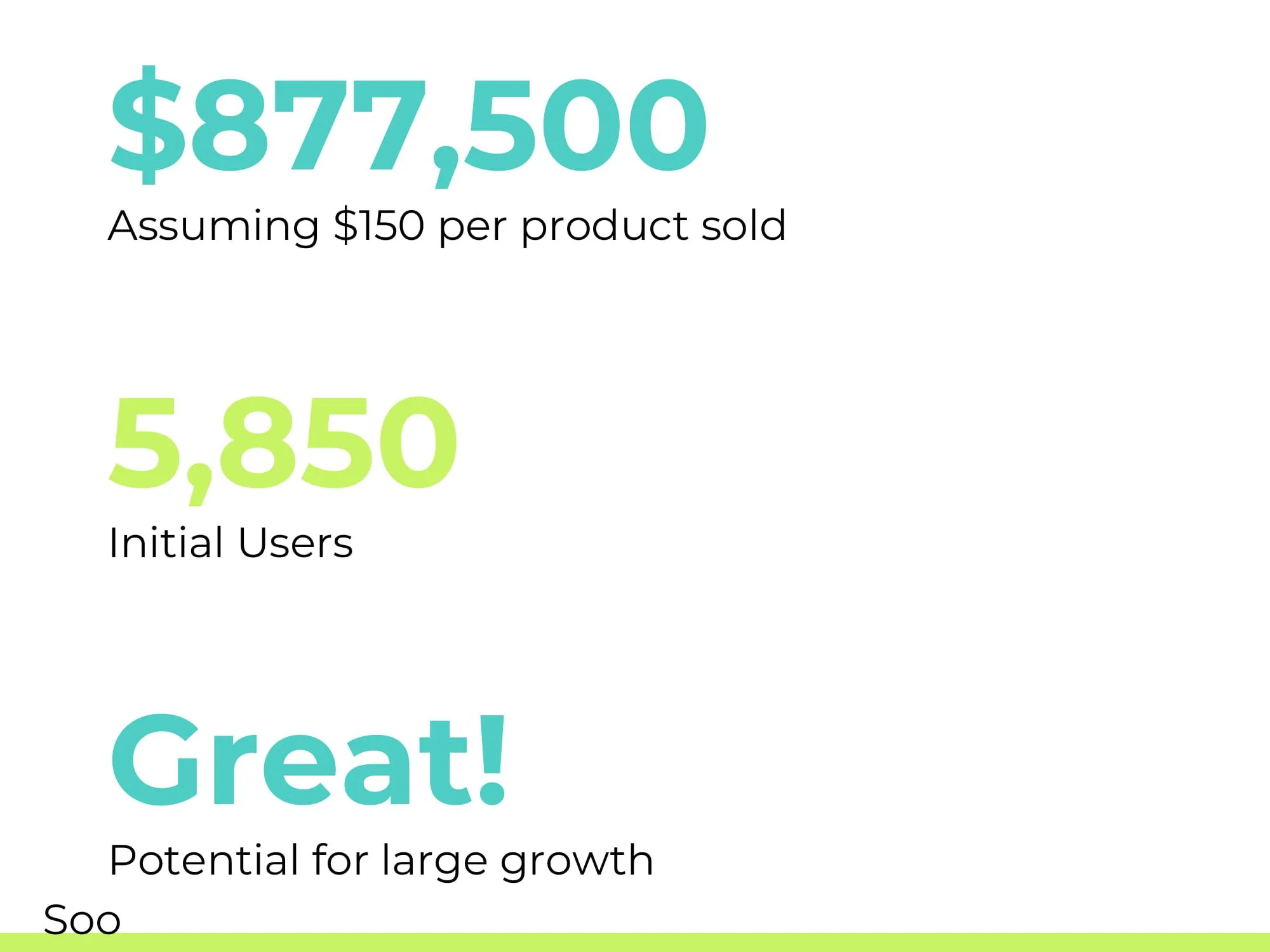
Creating potentially scalable costs for materials, labor, and overhead
With the help of advisors, I calculated what potential costs would be for this product. Starting at a higher end of $150-$200 and eventually scaling down to $120 to meet the average consumer’s budget.
Sourcing needed parts for prototype (cables, resistive touch screen, wiring, etc)
We had to provide our own parts so I did my best to source the parts that were most affordable/would ship to us in time, but also would still clearly display our design intent.
Although clunky, our prototype showed essence of our path forward enough to convince that a true product lay at the end of the road and I am proud of what I could put together with our constraints.
Prototype creation and part integration
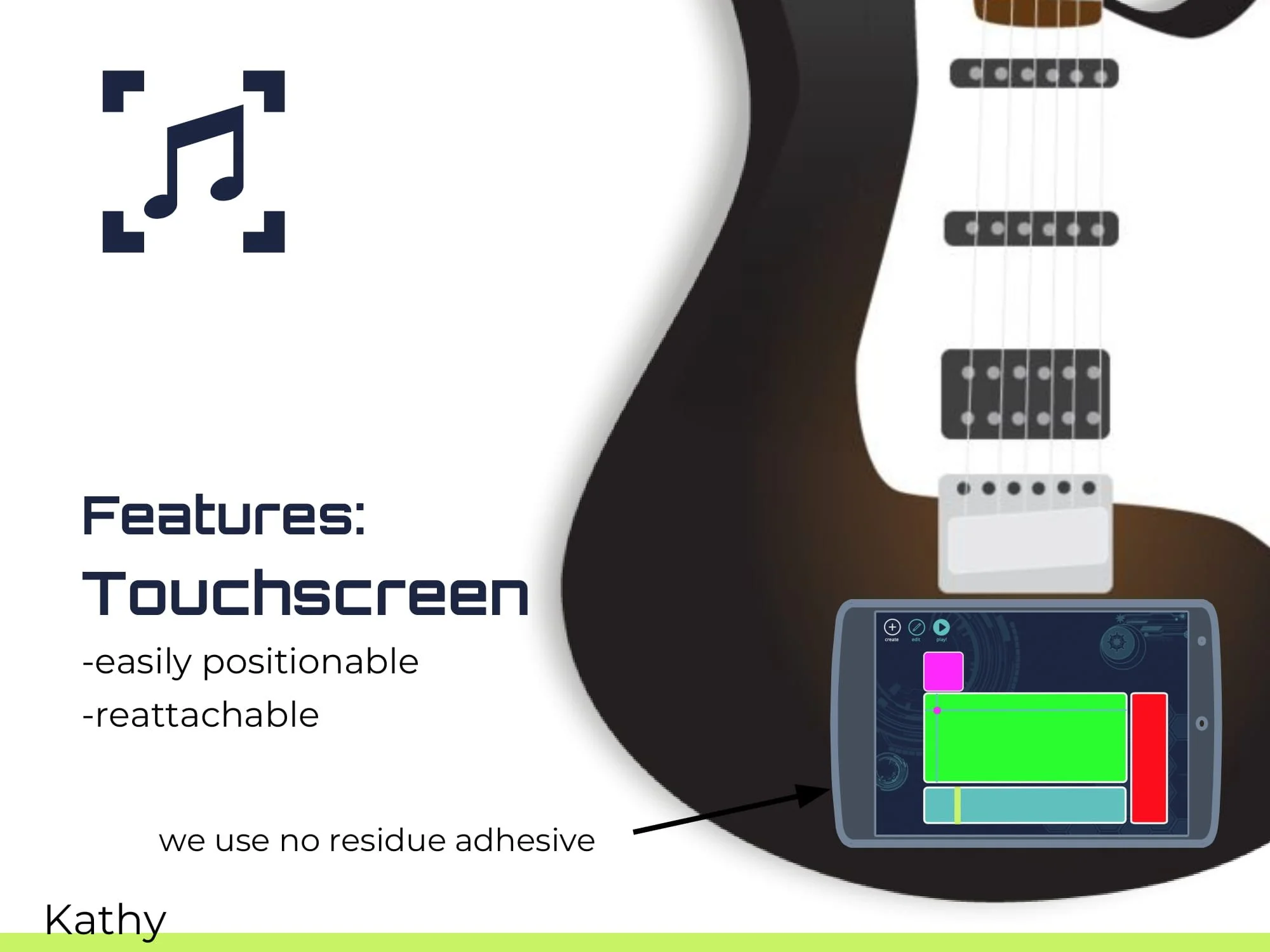
I tried different types of screens and tested each one, along with methods to attach the screen to the guitar effectively without it flying off during a more-intense guitar solo. Eventually, we knew we wanted to it to be magnetic but opted for a strap for the prototype as the magnet we wanted would be too costly for our budget at the time.
I also quickly modeled our vision in Solidworks to help pave the way forward with a unified view of what we were working towards.