Bottle Resonance
Tasked to create our own musical instrument, we used resonance from microphones placed inside glass bottles to create tones that could be adjusted by covering/partially covering the opening of the bottle.
Inspired by other musical art pieces such as I Am Sitting in a Room and The Sound of Empty Space, we wanted to use the resonance from empty space similarly, but also have it be a playable musical instrument.
I am Sitting in a Room “features [the artist Alvin] Lucier recording himself narrating a text, and then playing the tape recording back into the room while re-recording it. The new recording is then played back and re-recorded, and this process is repeated. Due to the room's particular size and geometry, certain resonant frequencies are emphasized while others are attenuated. Eventually the words become unintelligible, replaced by the characteristic resonance of the room.”
The Sound of Empty Space “is an art installation by Montreal-based composer Adam Basanta that explores the harmonic sounds created when feedback is generated between microphones, speakers, and their environment.”
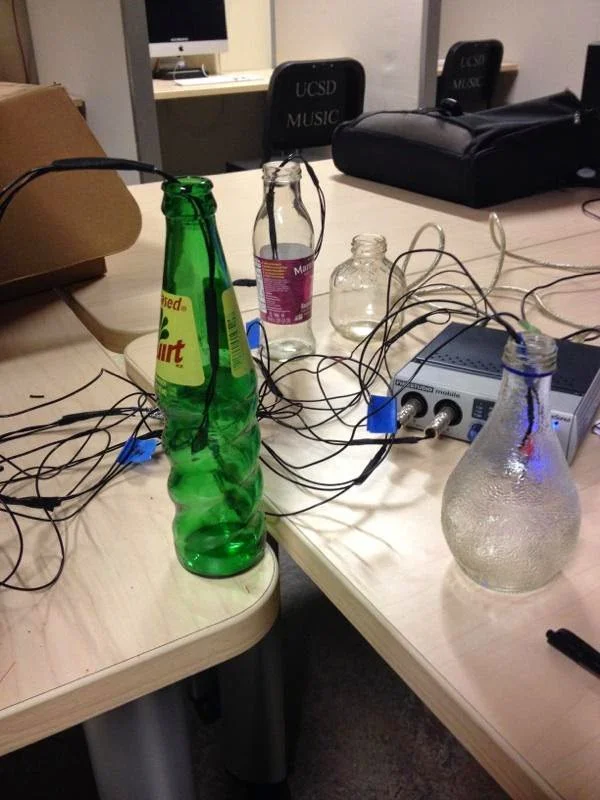
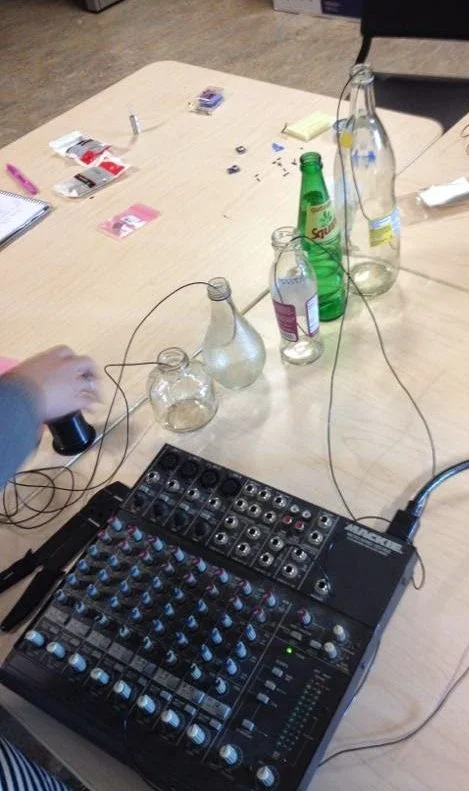
our final instrument created from
variously sized glass bottles
The Process
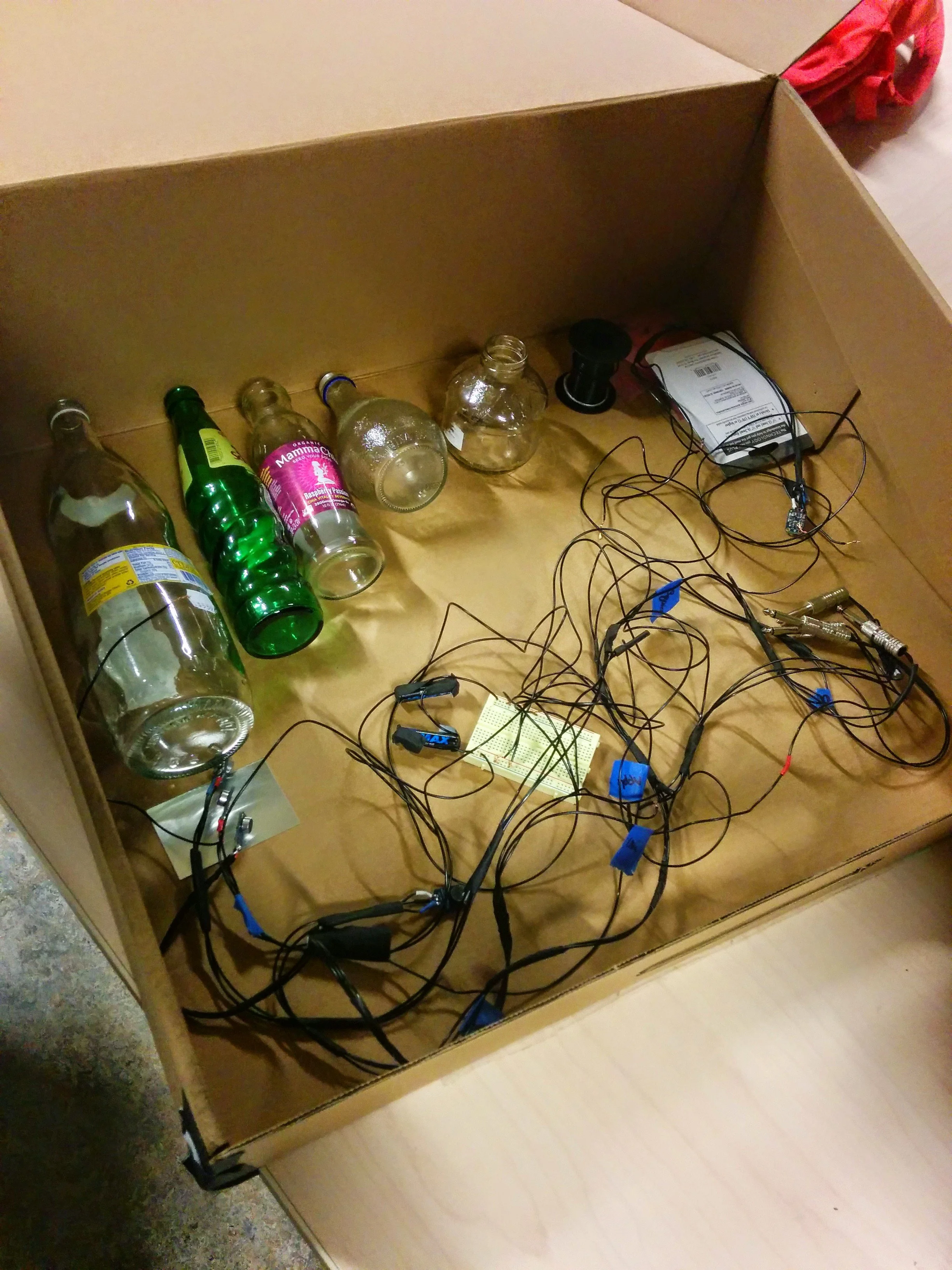
We first searched for uniquely shaped glass bottles that we promptly chugged the juice out of, then washed/dried cleanly. (You’ll notice some of my favorite drinks like orangina and martinelli’s apple juice).
Being the sole engineer in a team full of musicians, I taught my team of 4 how to strip wires, solder them properly, and keep safe by ensuring they were not breathing in the fumes/properly ventilating. I did all the critical soldering and procurement for the electronic components (microphones, 1/4” connector, breadboard, copper stranded/solid wires, heat shrink tubing). I also provided the tools such as the soldering iron, solder, heat gun, wire stripper, multimeter, and other small hand tools.
My team provided the sound board and programmed the filters on the audio signals to get the microphones to resonate properly with the empty space. I learned a lot about digital sound processing and how to use Ableton Live to mix music!
Because the frequency also resonates with the size of the room that the bottles are in, the tones changed when we performed our musical instrument in comparison to when we practiced. I loved discovering this and I feel like we only really hit the tip of the iceberg for this build!
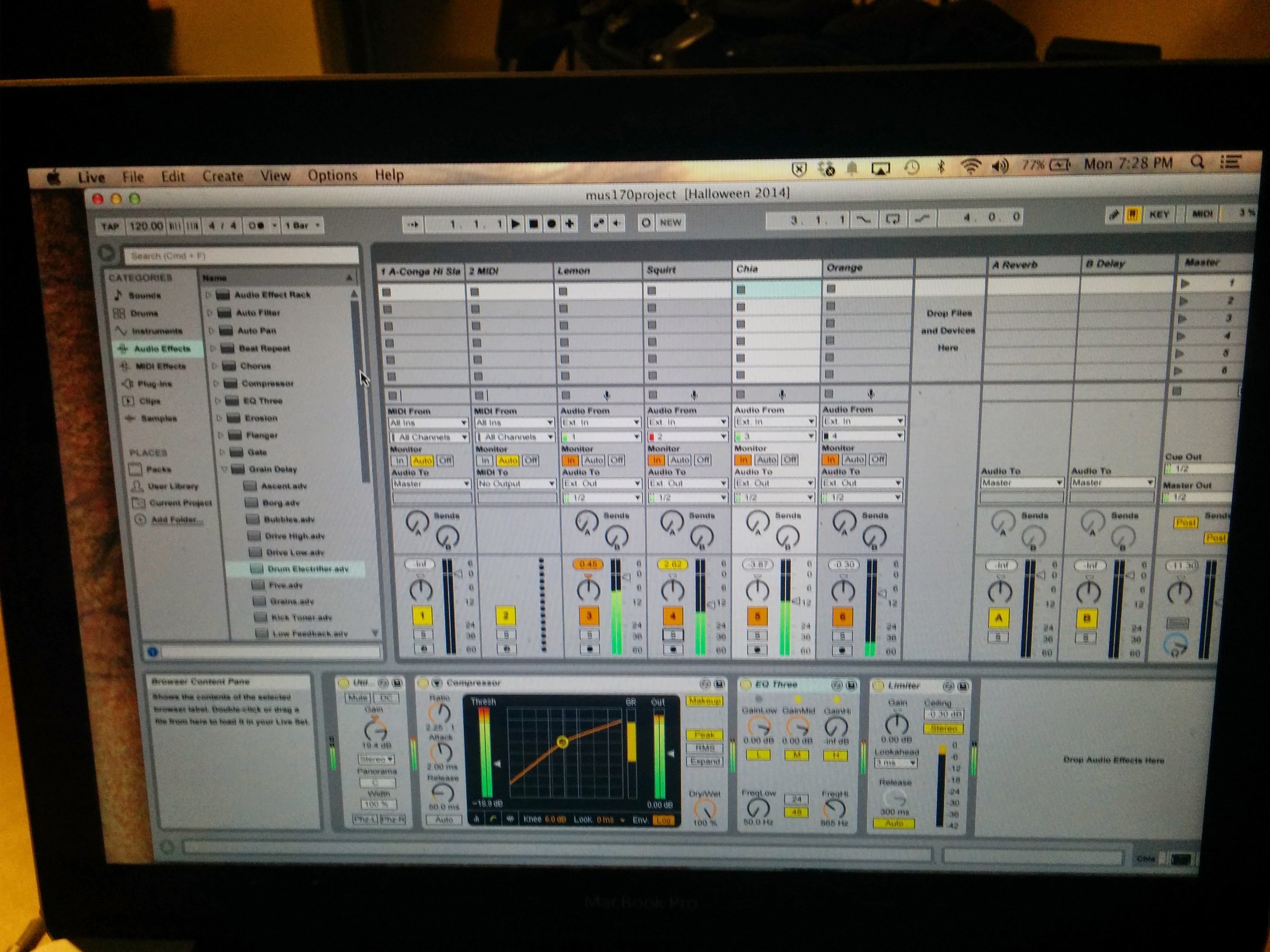
Filters we used in Ableton Live
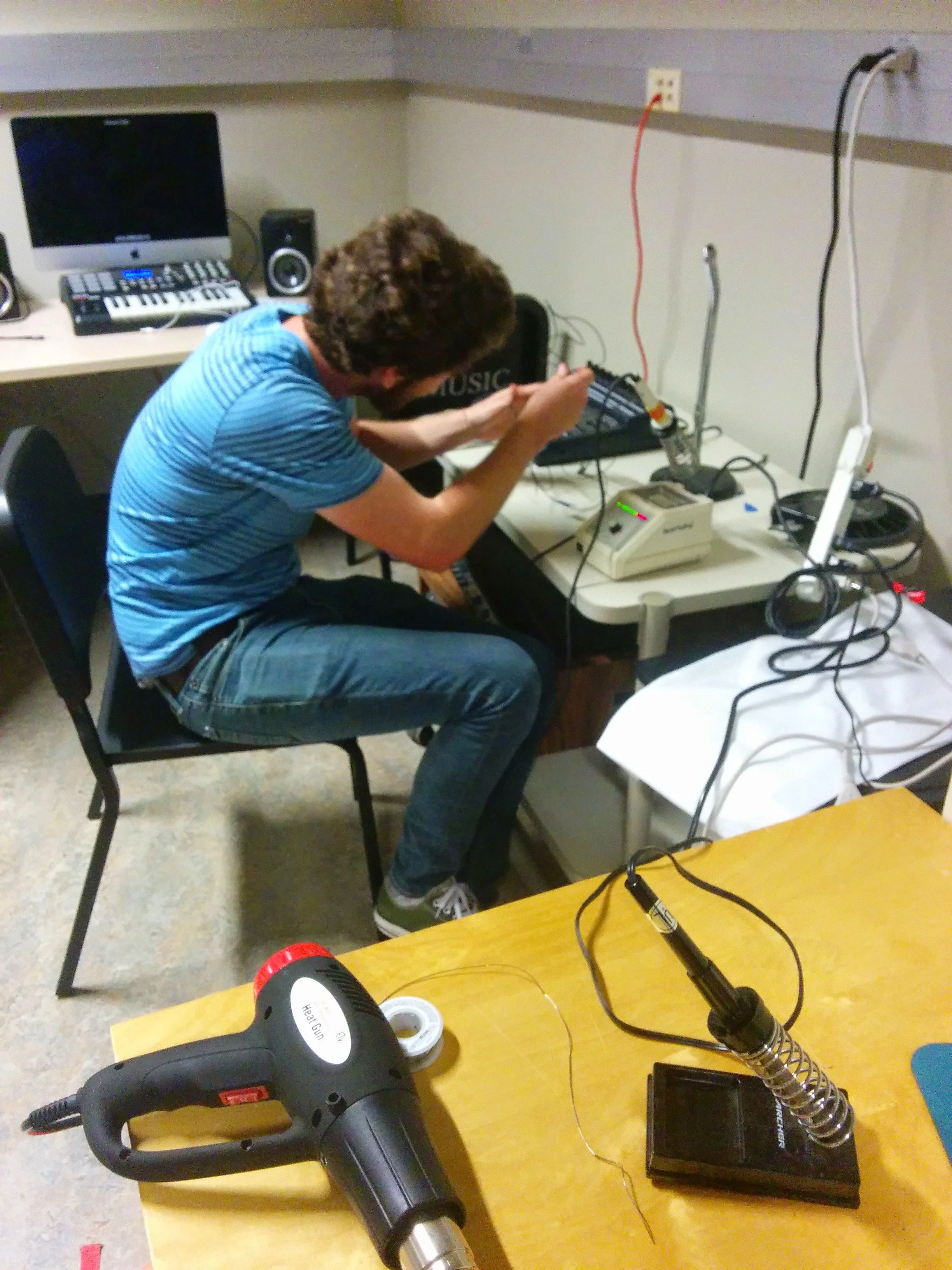
my teammates first successful soldering session after some practice (I’m a proud mama bear)
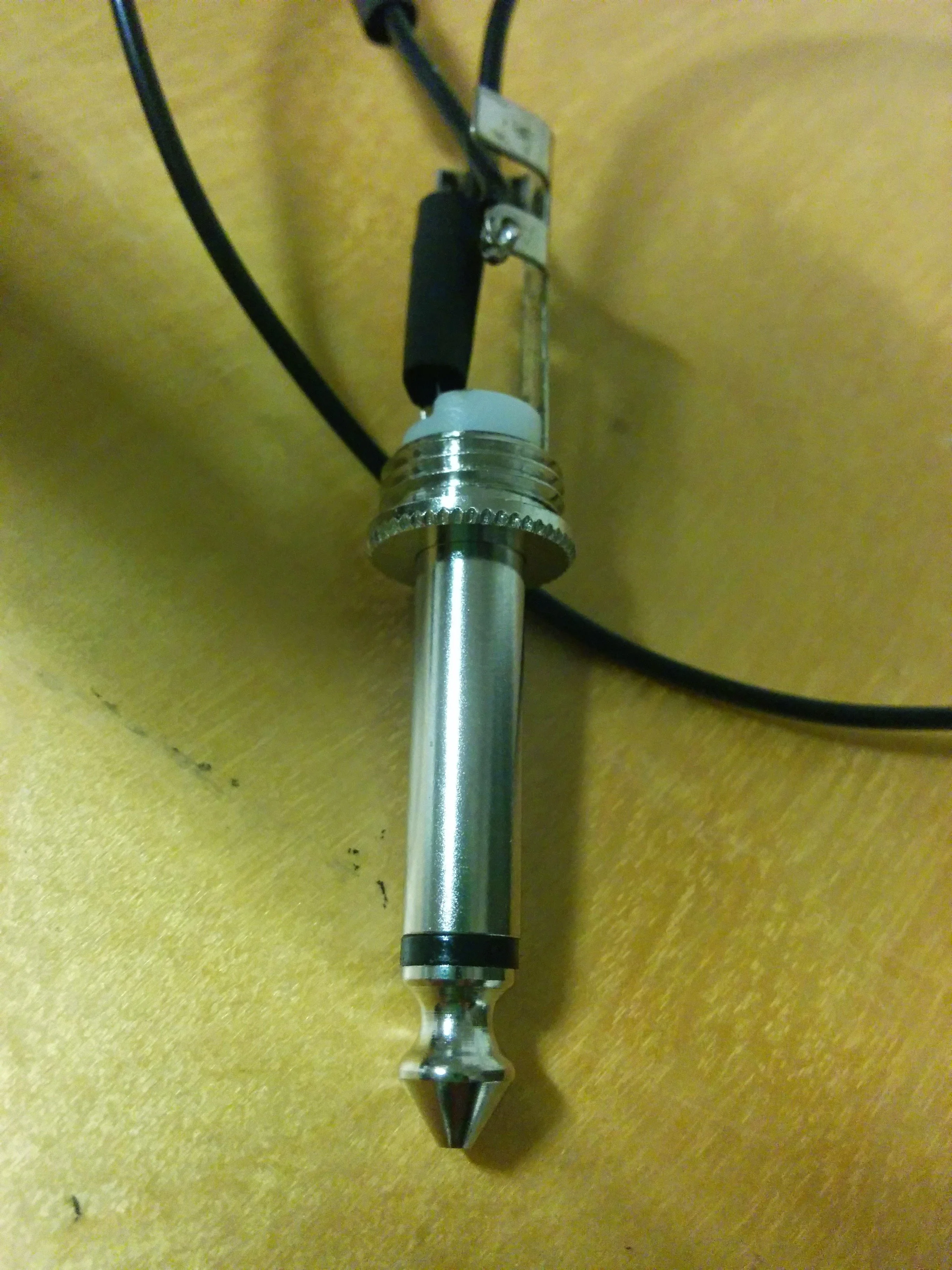

1/4” connector
mini microphone
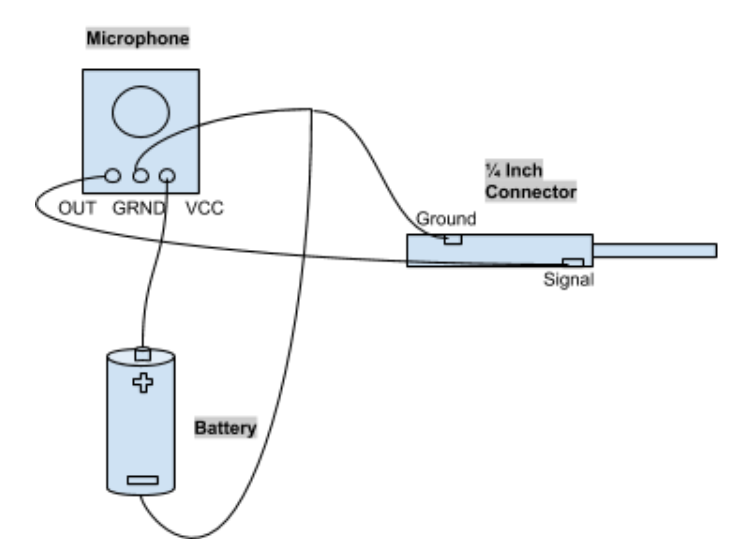
simplified wire diagram

our workspace and the tools I brought
How It Works
Each microphone creates a positive feedback loop with the speaker that is placed a distance away from the bottles. The frequency from the feedback of each of the bottles are determined by the shape and length of the bottle. The bottles can be “played” by tapping the bottles and partially covering the openings which change the frequency a semitone down.
When the opening is left open, the sound waves in the bottle are working in a situation where the boundary conditions are “fixed” (the bottom of the bottle) and “free” (the opening of the bottle). When partially covering the opening of the bottles, some of the waves that are bouncing against the walls of the bottle are acting in a fixed-fixed boundary condition causing the feedback output to be about a semitone lower than when left open.
All microphones were powered together by wiring two AAA batteries in parallel to the microphones by using a breadboard to create nodes for the positive (VCC) and negative (Ground) ends of the batteries. The quarter-inch connector was then plugged into a mixer with the other four microphones, which was then connected to a computer using Ableton Live. Each microphone input had a track on Ableton to adjust the gains of the frequencies. The frequency could then be put through low pass filters to get a clearer tone from the feedback signal or add any distortion/other effects.
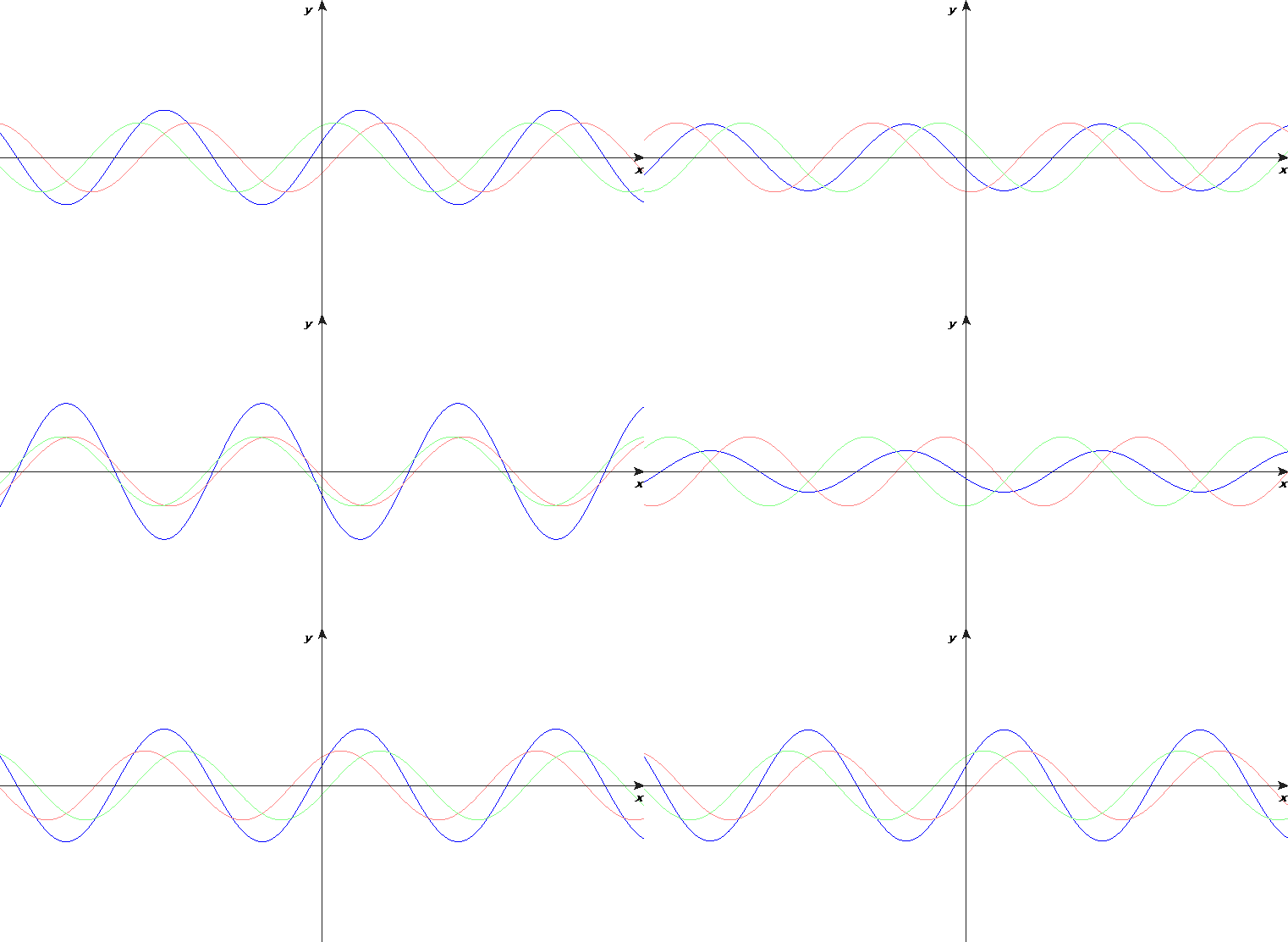
a harmonic resonant frequency
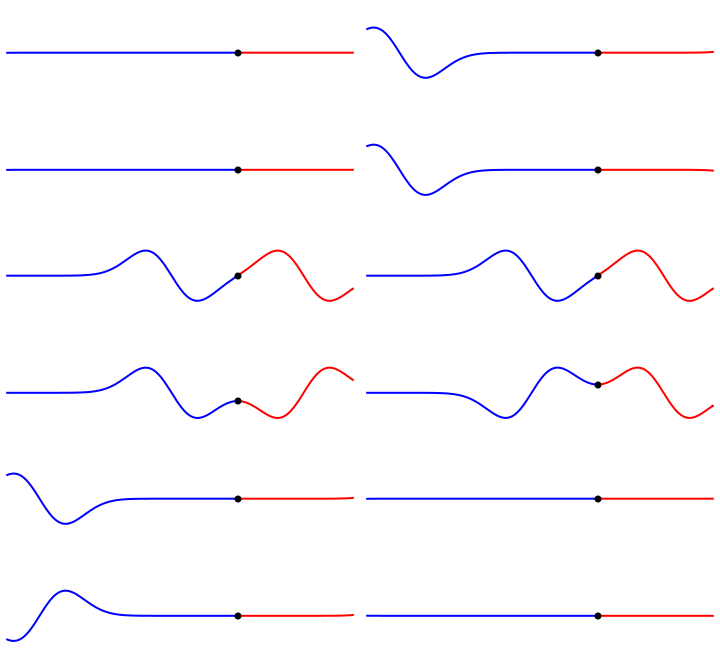
fixed vs free wave forms interacting

scale depicting the steps between tones and semitones